Wardogs carries 38 weapons across ten families, and the in-game shop tells you very little about what actually holds up in a firefight. Between a submachine gun at $1,200 in-game and another at $8,800, the price gap only explains part of the story. This guide walks through five weapons that genuinely shape a first ten hours, with the figures gathered from community databases. Worth saying up front: Bulkhead publishes no official stat sheets, so everything below comes from player-run tracking.
At a glance
Wardogs locks no weapon behind a class: six progression tracks unlock better kit without restricting what you carry.
Ammunition type matters as much as the gun, and loose rounds do not refill your magazines on their own.
Every figure quoted here comes from community databases, since the studio publishes none.
How to read the Wardogs arsenal before spending
The game splits its 38 weapons into ten families, according to the database kept by Wardogs Zone: eight assault rifles, five pistols, five sniper rifles, four launchers, four submachine guns, three marksman rifles, two light machine guns, two shotguns, one bow, and a final group of assorted kit.
That spread already tells you something. Assault rifles are the deepest family, and they are what you will face most often. Submachine guns number only four, which makes the choice simpler and rather more clear-cut.
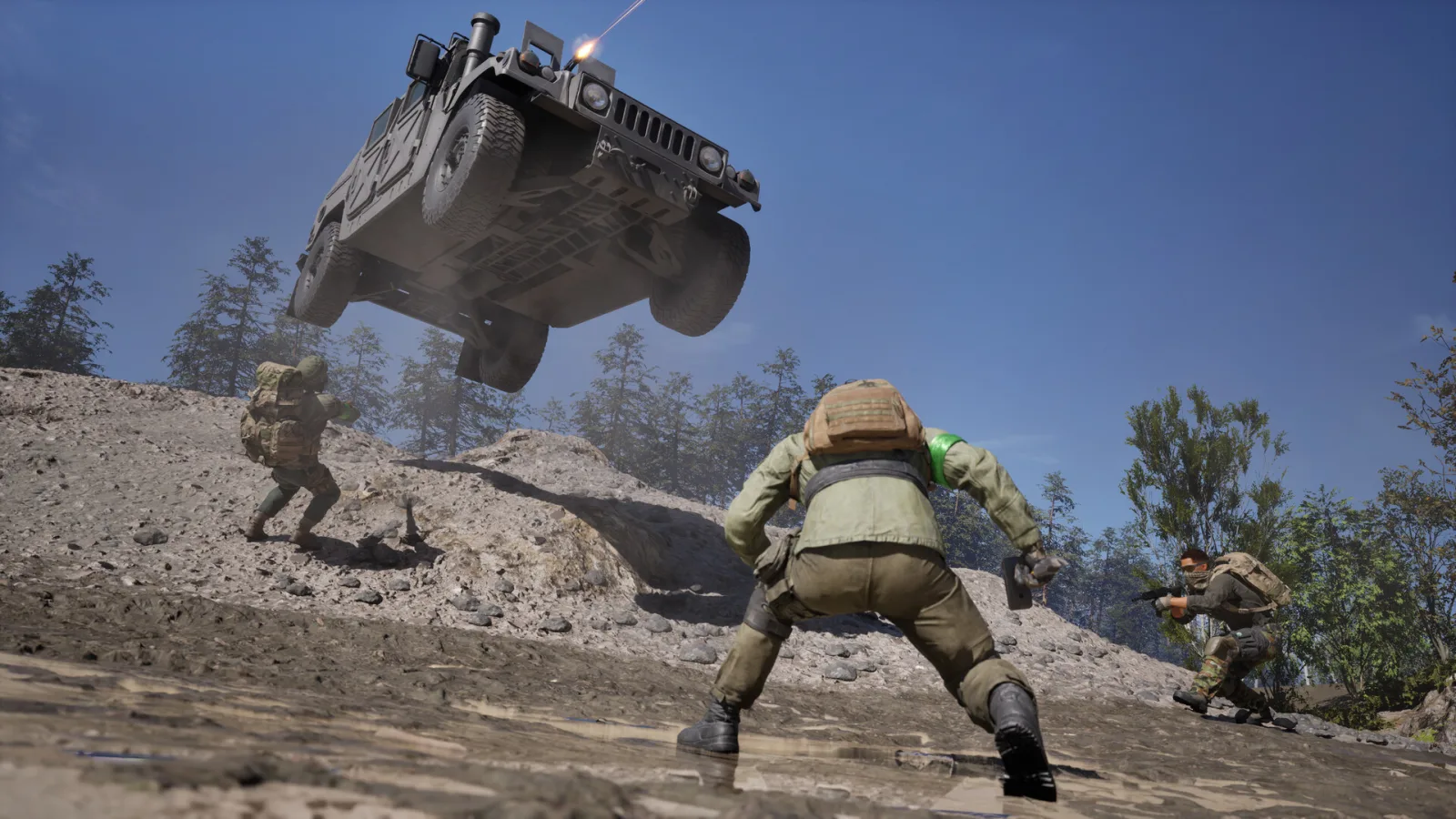
One thing to hold on to before spending. The in-game price measures a weapon’s ceiling, and your own level decides the rest. An expensive gun you cannot control returns less than a cheap one you know inside out.
The MP5, the gun that forgives mistakes
This is the entry-level submachine gun, chambered in 9x19mm and listed at $1,200 in game. It runs at roughly 800 rounds per minute, with the standard damage you would expect from 9mm.
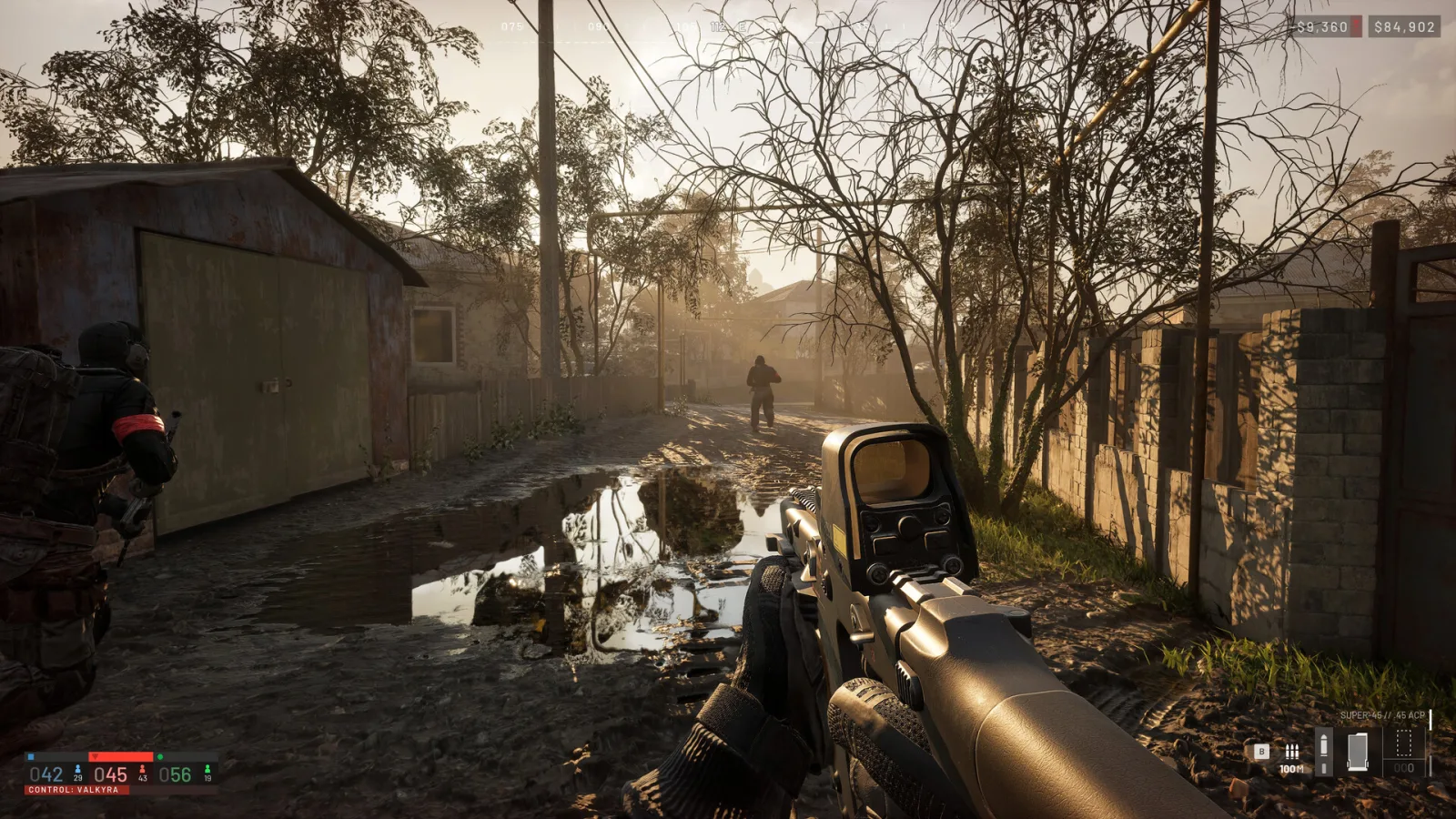
What makes it useful early is the ratio between what it costs and what it lets you do. At that price, losing it hurts nobody, which frees you up to take risks and learn the maps without weighing up every engagement.
Its limit shows up the moment range opens out. Indoors and in corridors it does the job. On an exposed ridge you will lose the exchange against more or less any assault rifle.
The Super-45, the next tier and what it costs
Seven times the price of the MP5 at $8,800, the Super-45 is chambered in .45 ACP. Community tracking puts it at 30 damage with a 1,200 rounds per minute rate of fire, which makes it the strongest submachine gun in Wardogs on paper.
That pairing of damage and rate explains its reputation. It also explains why it punishes loose aim so harshly: at that speed a magazine empties in a couple of seconds, and a drifting crosshair costs you straight away.
Buy it once your aim has caught up, not before. Picked up too early, it swallows money that would have served you better elsewhere.
FMJ or AP rounds, the choice that decides fights
Ammunition weighs as much as the weapon. FMJ covers most situations and stays the sensible default for a first loadout. AP earns its place once you work out the armour level of the opponents you keep losing duels to.
There is one handling detail that catches new players out, and the beginner guide published by games.gg flags it plainly: rounds sitting in your inventory do not refill your magazines automatically. You press C, behind cover, to top them up.
Check you are carrying the right calibre before the engagement too. Ending up with ammunition that does not match your equipped weapon is one of the more maddening ways to lose a fight.
The six progression tracks, and where to start
Wardogs imposes no classes in the traditional sense. Six progression tracks gradually unlock better kit: Assault, Medic, Recon, Support, Driver and Pilot. Nothing stops you carrying whatever you like in the meantime.
For a first character, two entry points make sense. Assault is the most familiar if you come from other shooters, because the muscle memory carries straight over. Medic is the other solid pick, since healing and reviving bring in steady cash even while your aim is still settling.
That steady income counts for more than it sounds in a game where kit is bought. Earning money without having to win duels reshapes the whole early game.
The Hot Zone, the multiplier nobody looks at
Last point, and it is the one that shifts the rhythm of a match most. Inside the Control Zone sits a smaller moving area, the Hot Zone. Anything done inside it is worth more experience: fighting, reviving a teammate, hauling supplies or supporting the squad.
PPut plainly, two players doing exactly the same things across a match will not progress at the same rate depending on where they do them. It is a simple mechanic, and Wardogs itself barely draws attention to it./p>
Wardogs sat fifth among the most played games on Steam on 23 September, peaking at 302,873 concurrent players according to Valve’s own chart, and sixth among Twitch categories per Twitch Tracker. The competition out there is not about to thin out. We also noted that the studio itself warns it will run short of content to sustain that pace, which makes the question of progression all the more immediate.
Upcoming dates, releases, DLC and major updates, are all in our calendar.