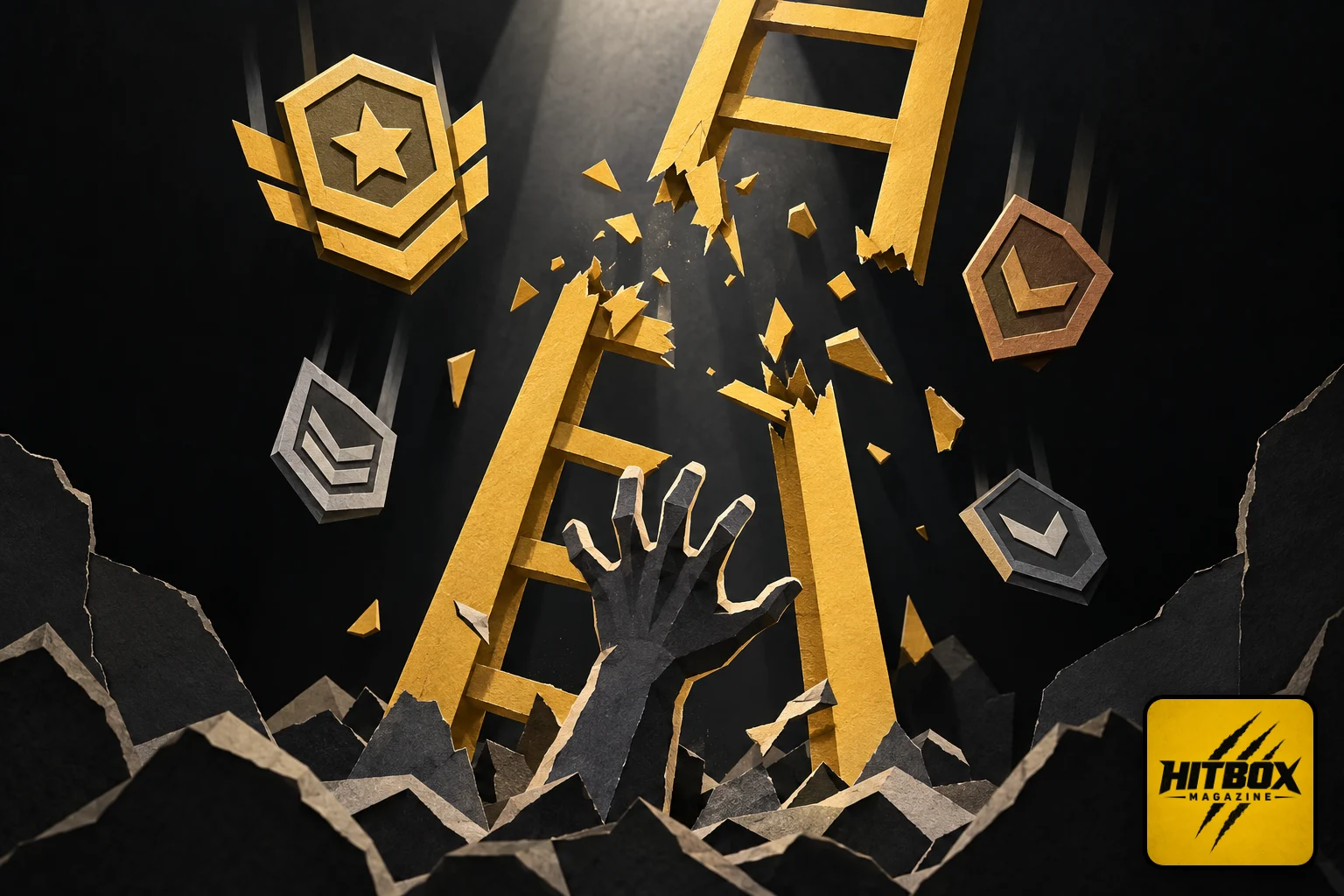
Buying a rank in League of Legends or Valorant has never been especially subtle, but it used to carry little real risk. Riot Games has now published the running total for its Anti-Boost system, and the number is blunt: 296,416 accounts penalised since the system went live. The studio also settles an argument both communities have been having for years, by filing smurfing in the same drawer as paid boosting. Here is what Riot Games actually detected, how penalties differ depending on your role in the scheme, and what the studio says is coming next.
At a glance
296,416 accounts have been penalised across League of Legends and Valorant since Anti-Boost launched in 2025.
Riot classes boosting, smurfing and hitchhiking as cheating, on the same footing as third-party software.
The next steps reach into the player’s hardware, with TPM 2.0 and a Vanguard Pre-Check attestation.
Riot Games puts two years of enforcement at 296,416 accounts
The figure comes from Phillip Koskinas, who runs competitive integrity at Riot Games, in a post published on September 17. Known online as mirageofpenguins, he owns the portfolio that includes Vanguard, the company’s anti-cheat layer. The total covers both games and runs from the moment the system went live.
The rollout timeline explains the gap between the two titles. Anti-Boost arrived on League of Legends first, in September 2025, then expanded to Valorant over the summer of 2026. Penalties have been landing continuously since, in waves rather than as a single sweep.
Beyond the account count, the studio also published how much progression it clawed back. On the League side, more than 105 million league points were stripped. On the Valorant side, more than 33 million ranked rating points went the same way. Bought rank gets taken back, not just punished.
Boosters, boosted players and hitchhikers are punished separately
The most useful part of Riot’s post is its taxonomy, because it answers who pays for what. The studio separates three roles inside a single rigged match. The booster is the highly ranked player logging into somebody else’s account. The boosted player owns that account and pays for the climb. The hitchhiker is the lower-skilled player who queues alongside the booster and rides along.
Each gets their own treatment. The boosted player loses the points and rewards earned that way, and faces escalating suspensions the studio describes as running from three days up to deliberately absurd lengths. Purchased smurf accounts are not suspended at all, they are banned outright by Vanguard. A repeat booster sees penalties climb onto their main account, which changes the economics of the service they are selling.
The hitchhiker is the case that will spark arguments. Riot Games states that undeserved rank is removed even when it was gained without intent, for instance by simply queuing with a friend who was paying for their own climb. Not meaning to benefit does not protect the rank.
Calling smurfing cheating closes a long-running argument
The real news is not the number. It is the sentence attached to it. Riot Games writes that boosting, smurfing and hitchhiking are all cheating, drawing no distinction of degree with external software. In both communities, running a second account has long been defended as ordinary behaviour, whether to play with lower-ranked friends or to learn a role without wrecking a main account.
The studio closes that discussion by moving it. The issue stops being the player’s intent and becomes the distorted ladder they leave behind. An account whose rank does not reflect real skill degrades every match it joins, for the nine other people in it. Framed that way, an honest second account and a bought rank produce the same measurable effect on matchmaking.
That said, the execution is debatable on one point. A player who makes a secondary account and never pays anyone ends up in the same bucket as a paying customer, even though the behaviour and its footprint on the ecosystem differ in scale. Riot Games accepts that shortcut.
What Vanguard spots now, and what comes after
Technically, Anti-Boost is not hunting for software installed on a machine. It flags rank progression that does not match the account’s usual behaviour, which is to say a climb siphoned from a stronger player rather than earned. That makes it statistical signature detection, not memory analysis.
For what happens next, Riot Games points to three directions, all aimed at verifying the real person behind an account. Multi-factor authentication would become a wider requirement. The TPM 2.0 hardware security module would tie an account to a machine. And a mechanism called Vanguard Pre-Check would add hardware attestation before a match begins.
All three raise the same question earlier Vanguard expansions raised, namely how much a publisher can legitimately demand of a player’s machine in the name of fair ranked play. The fight is moving down to the hardware layer. No dates have been given for any of the three.
Upcoming release dates and major updates are tracked in our games calendar, which you can filter by platform.