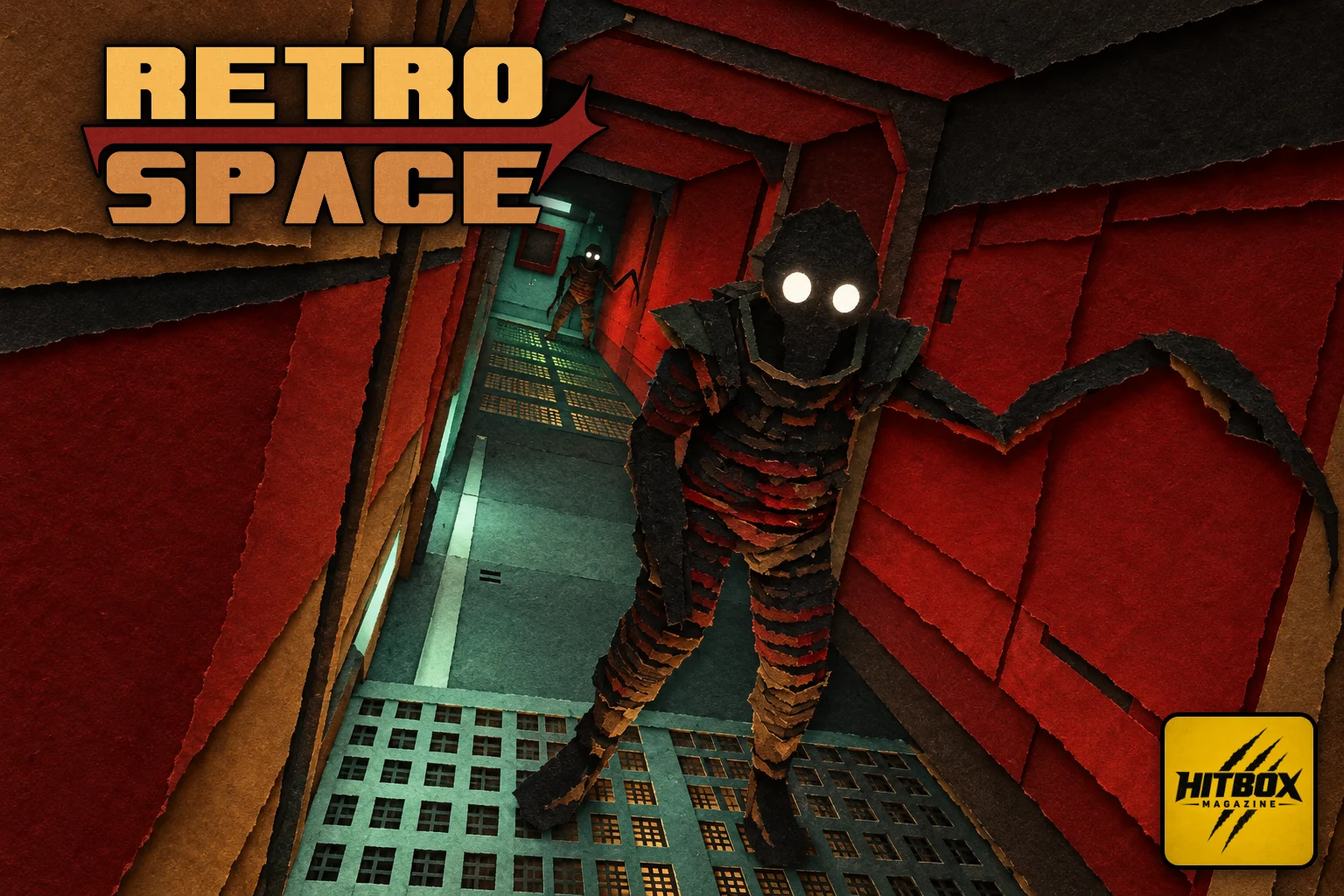
RetroSpace came out on 1 October on PC, PS5, Xbox Series and Switch 2, priced at €19.99 on Steam. Developed by Hungarian studio The Wild Gentlemen and published by Kwalee, it’s a space horror immersive sim that puts you in the overalls of a humble janitor, aboard a station swallowed by a black hole. I found it incredible. Its disco atmosphere, its exploration packed with secrets and the way it punishes every failure kept me hooked for a good twenty hours. On PS5, where I played it, a few technical issues forced me to restart the console, but nothing that stops me putting it among the best indie games of the year.
At a glance
RetroSpace blends the legacy of System Shock 2, BioShock and Fallout with a 1970s disco look that gives it a real identity of its own.
Exploring the Aurora 5, a vast and interconnected station with no objective markers, is its biggest strength.
Freezes, the odd frame rate drop and an unclear map get in the way of a 17 to 20-hour adventure at times.
A janitor aboard the Aurora 5, a station swallowed by a black hole
You play a janitor aboard the Aurora 5, a space station wrecked by a disaster tied to a black hole. Mutants prowl the corridors, and time itself seems to have come completely unstuck. Within minutes, I wanted to know what had happened, find a way out and work out who I really was. The story unfolds bit by bit through audio logs, the characters you meet and the details tucked away in the environments.
The influences are easy to spot: System Shock 2, BioShock, Prey and Fallout, with dark corridors and creatures that bring Dead Space to mind. Bánk B. Varga, the studio’s creative director, named Thief, System Shock, Deus Ex and Prey in his interview with Wesley LeBlanc for Game Informer. Yet RetroSpace doesn’t feel like a copy of any of them. Its absurd sense of humour and retro-futuristic disco style give it a personality all of its own, which is rare in a genre that usually takes itself very seriously.
The Wild Gentlemen already had a strong calling card. The 23-person studio made its name with Chicken Police – Paint it RED!, a black-and-white detective story full of animals, and RetroSpace is its first real step in a new direction, as we covered in our piece on RetroSpace’s launch and its eight endings.
A PS2-style look soaked in disco
The atmosphere grabbed me first. RetroSpace goes for a pixelated, low-poly look that recalls the PS2 era, with very colourful lighting and a retro-futuristic world inspired by the 1970s. Orange carpets, neon, mirror balls and kitsch posters sit right next to genuinely horrible creatures. That clash between sometimes tacky decor and properly frightening mutants works brilliantly.
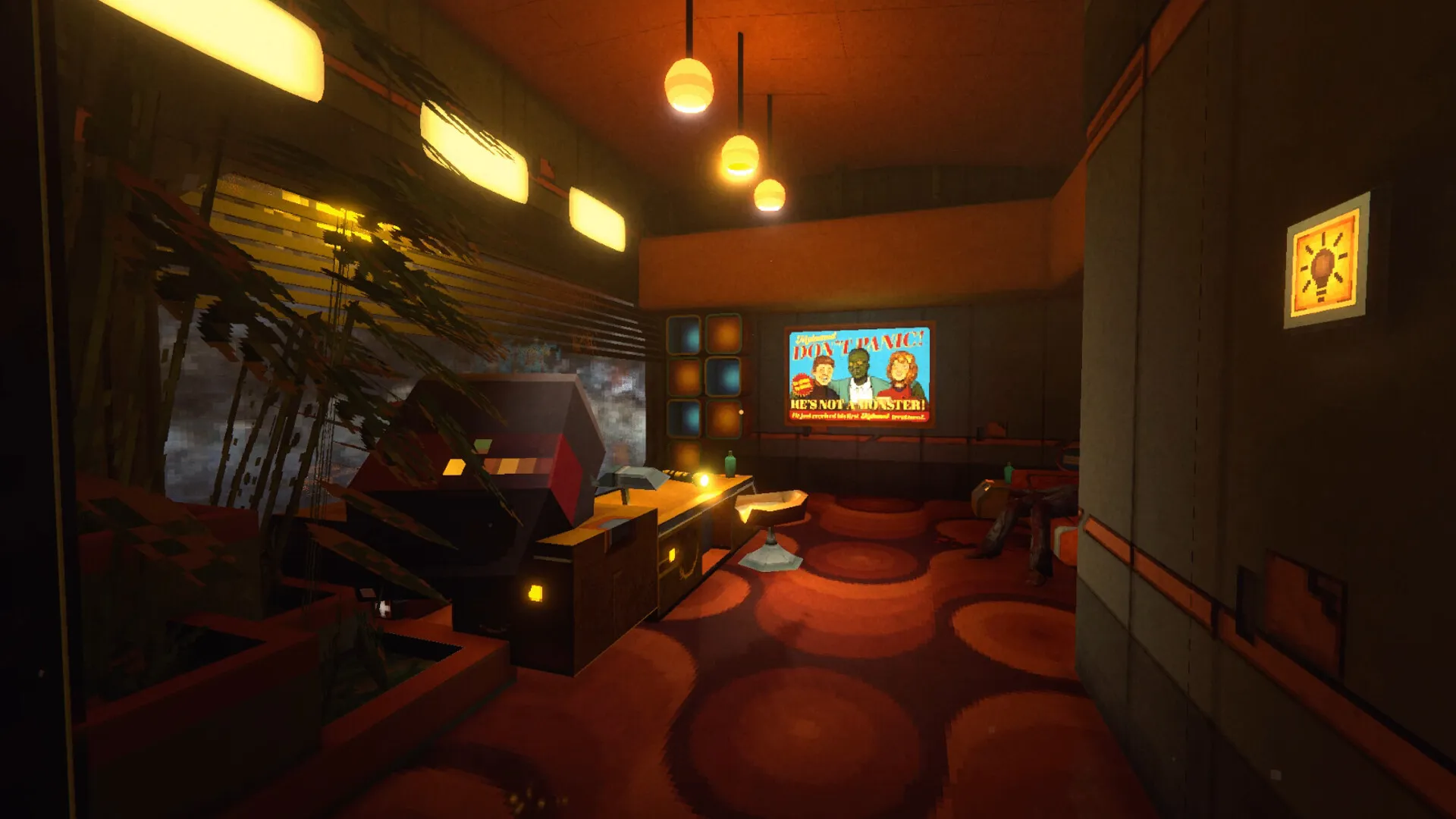
In RetroSpace, the sound does the rest. The unsettling noises of the mutants, the creaks of the station and the music build an atmosphere that never lets go. The weapons sound satisfying, and the English voice acting adds to the quality of the whole package.
The Aurora 5 plays like a metroidvania, with no satnav to guide you
I loved exploring the Aurora 5. The station is huge, interconnected and full of shortcuts and secret passages, and some areas only open up once you’ve found the right tool. A locked door, a grate or a hostile turret can often be bypassed through another route, a terminal or something in the environment. RetroSpace keeps pushing you to look before you act, and that’s what makes each discovery feel earned.
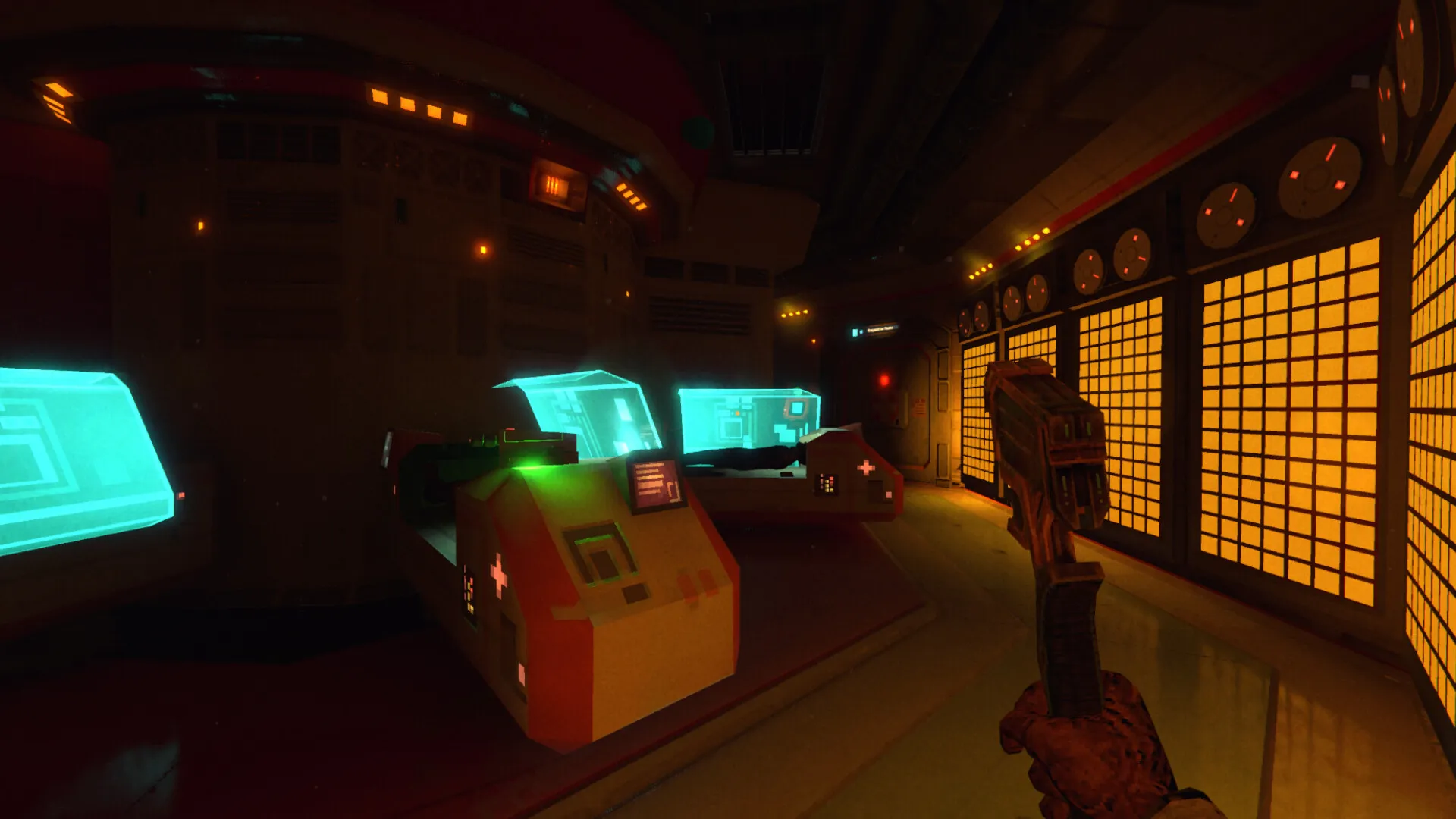
That old-school approach has a downside. The game refuses to guide you with precise markers, so I often had to take notes to remember codes, clues and routes I’d already found. The map isn’t clear, and I sometimes went round in circles for quite a while. Objectives can be too vague in places, and the rewards at the end of a secret area aren’t always worth the effort. The controls also take some getting used to: the first few hours aren’t easy.
A wrench and a cleaning spray make the best survival kit
Your wrench quickly becomes essential. It’s for hitting enemies, repairing equipment, smashing obstacles and opening hidden passages. The rest of the janitor’s kit has its uses too: the cleaning spray reveals clues and helps solve certain problems. I love the idea of a hero who survives with the tools of his trade.
Every fight can be tackled your own way. You can use your weapons, sneak past, set traps or turn the environment against your enemies. Some enemies even attack each other, and it seems possible to finish RetroSpace without killing anyone. I enjoyed the combat thanks to the range of weapons, their upgrades and each enemy’s particular weak points. Plenty of situations genuinely encourage experimenting, even if the AI can be exploited a little too easily at times.
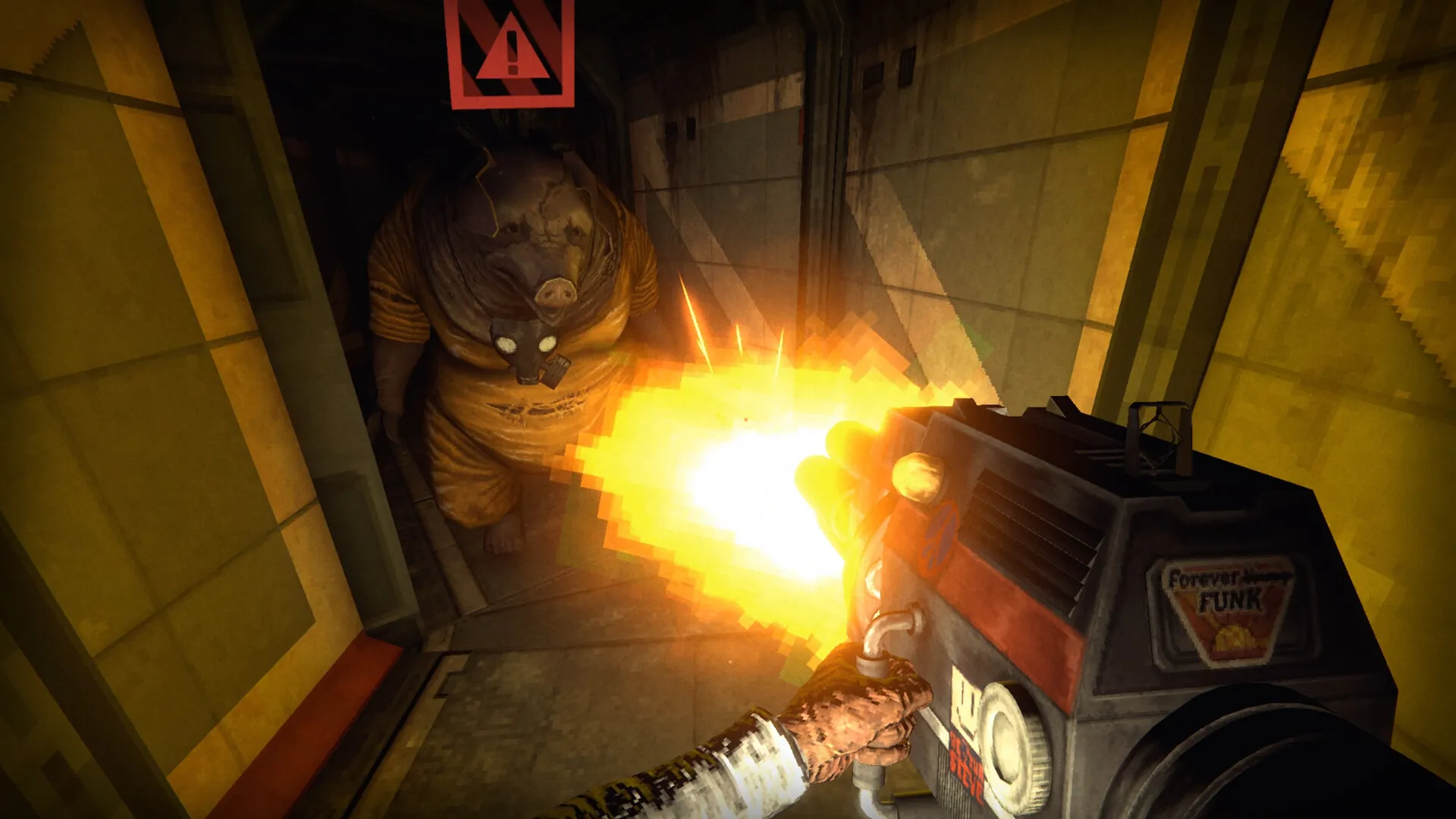
You also have to manage ammo, healing items and a limited inventory that forces you to make choices. Useless items can be recycled into scrap, mostly used to upgrade your arsenal. It’s a shame the inventory itself is so awkward: you can’t easily split stacked items or rotate them to save space, which quickly becomes a pain when you’re carrying too much gear.
Mutamods and sickly clones, so every failure leaves a mark
As the adventure goes on, you discover Mutamods, genetic modifications that grant special abilities. Some let you regain health under intense light, while others boost your senses, mobility or damage, sometimes with a trade-off. You can also upgrade your weapons and suit with the resources you collect. I wish these options turned up earlier, since I’d have had more time to make the most of them.
The most original idea in RetroSpace is how it handles failure. When you fall, you come back as a clone saddled with drawbacks, including illnesses that make the rest of the game harder. To get rid of them, you either pay or head back to your old body to recover its DNA. After one of those comebacks, I caught the flu, and staying stealthy was suddenly out of the question. That kind of consequence really changes how you play, and it made me smile as much as it annoyed me.
A janitor’s hideout that grows with every survivor you bring back
Between expeditions through the corridors of RetroSpace, you head back to the Janitor’s Haven. The characters you bring there unlock new options: upgrades, equipment and side quests. The place slowly evolves and gives you a welcome breather between two explorations, a bit like a base you enjoy watching fill up.
Freezes and frame rate drops, the technical cost of RetroSpace
RetroSpace has its share of technical problems. I saw objects and textures vanish, teleporting glitches and moments where the environment seemed to fade away for a second. A few freezes forced me to restart the console, which is particularly frustrating in the middle of an expedition, and the frame rate drops at times as well. The Wild Gentlemen told me it’s working on a major patch for the PS5 version, due within the next few days, to tackle the uneven frame rate and the freezes some players have run into.
The interface of RetroSpace is another weak point, especially on a controller. Getting around the menus, the map and some tools feels clunky. None of this breaks the adventure, but these hiccups crop up often enough to notice.
RetroSpace, one of the standout indie games of the year
Despite its flaws, what stays with me is a genuinely gripping immersive adventure, carried by its world, its exploration, its varied mechanics and a story that keeps you curious right to the end. The endings bring real closure, even if some characters and revelations deserved more room. Expect between 17 and 20 hours depending on your pace.
For immersive sim fans, RetroSpace is an excellent find, as long as you can live with a few technical frustrations and deliberately sparse guidance. At €19.99 on the RetroSpace Steam page, it deserves its place among the indie games that matter this year.

| What we like | What we like a lot less |
|---|---|
| A retro-futuristic disco atmosphere, somewhere between kitsch and horror | Controls that are tricky to pick up at first |
| A PS2-style look and sound design that pull you right in | Freezes that force you to restart the console |
| An interconnected station full of secrets and shortcuts | An unclear map and sometimes vague objectives |
| Several ways to tackle every obstacle, stealth included | The odd frame rate drop |
| Sickly clones that really change how you play | An inventory that’s a pain to organise |
| A hideout that grows as you bring characters back | Upgrades that arrive late |
| What might make you buy itOld-school exploration that rewards every detour | What might put you offTechnical bugs and deliberately vague guidance |
To see what’s landing over the next few weeks, the Hitbox release calendar lists every date with its official source.