ION LANDS spent five years on Nivalis Nights, and you can feel it in how much the game hands you at once. You inherit a battered noodle stand in a cyberpunk city that climbs straight upwards, and your job is to turn it into a business that works, then a second one, then a bar and maybe a nightclub. Between the quests, the fishing, the plants to grow and the flat to decorate, I’ve put around ten hours in and still feel like I’ve barely scratched the surface. There’s a genuinely good game in here. There’s also a performance problem that shows up far too often.
At a glance
Nivalis Nights launched on Steam on 29 September at £19.79, developed by ION LANDS and published by 505 Games.
You start with a run-down noodle stand and can end up running several businesses, bars and nightclubs included.
The city and the soundtrack are superb, while frame rates drop hard in busy areas.
Nivalis Nights starts you off with a battered noodle stand
You take over a noodle stand in poor shape, and everything grows outwards from there: hiring staff, buying ingredients, upgrading the place one piece at a time. The Steam page for the game, developed by ION LANDS and published by 505 Games, says as much in its opening line. It’s a management loop most of us know, except it sits inside a city that carries on living around you.
What hooked me is the blend. Management, life sim and cyberpunk exploration hold together instead of getting in each other’s way, and each system feeds another. You can hand work over to your staff or stay behind the counter doing everything yourself, depending on how you feel that evening. Both approaches work just as well, and that’s what makes the management side so satisfying over time.

Progress doesn’t stop at the restaurant. You can branch into several kinds of business, bars and nightclubs included, and that’s where Nivalis Nights really feels like it’s building towards something long term. The stand you started with becomes an address, then a second one, and you catch yourself eyeing the empty shopfronts of a district wondering what you could put in them.
A city you explore as much as you work in
The city in Nivalis Nights sprawls a good deal wider than I expected, breaking down into districts that open up as the hours go by, with characters to meet and quests to pick up along the way. I often left my business ticking over on its own to go and see what sat two levels below, and it rarely disappointed.
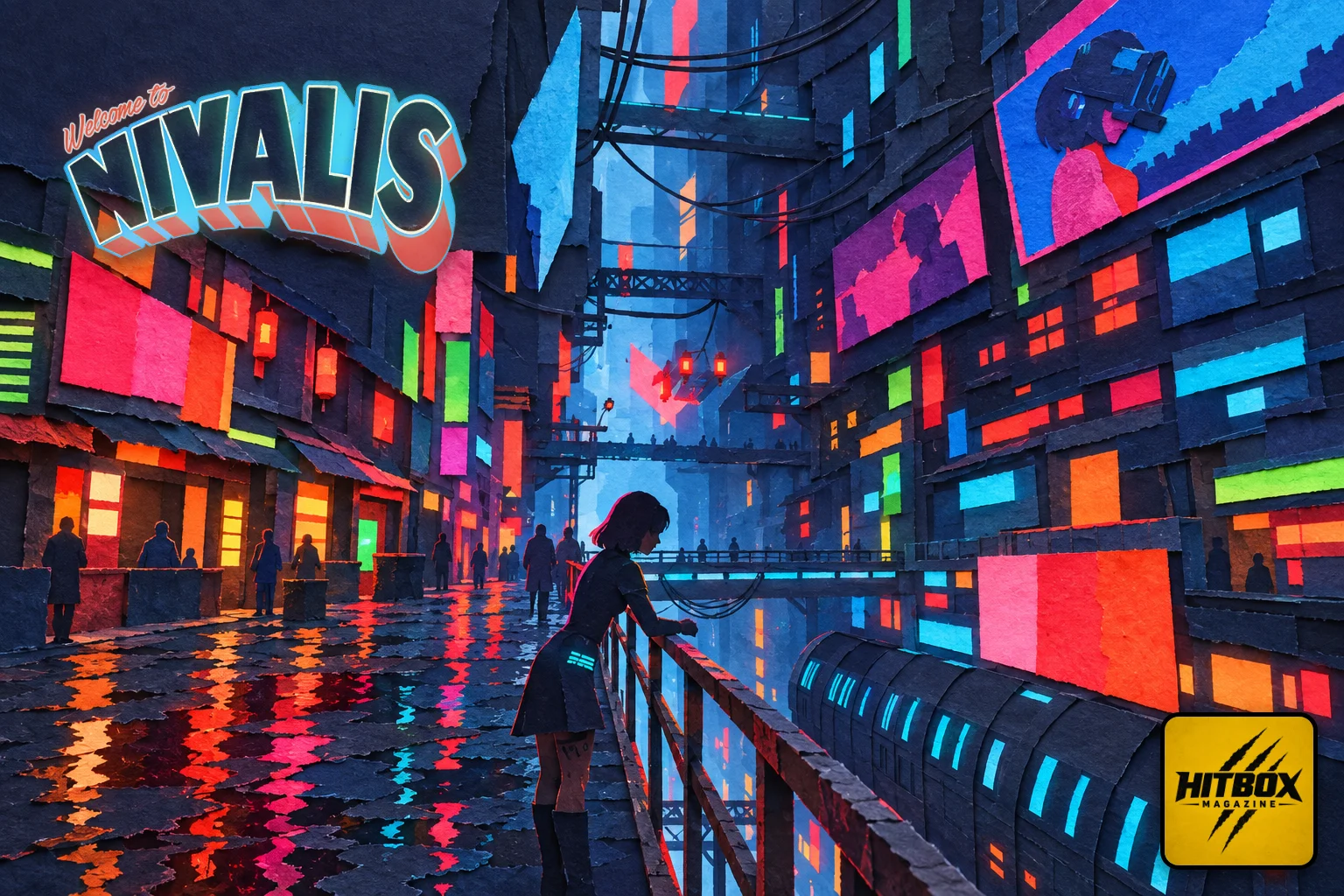
Visually Nivalis Nights holds up beautifully, with a strong cyberpunk art direction, neon spilling out everywhere, shifting weather and architecture that lands the moment you stop to look up. The synthwave soundtrack carries all of it and makes certain scenes properly immersive, especially once the rain arrives.
The residents do a lot of the work in making the place feel alive. They have their own stories, they turn up again, they offer quests, and some end up working for you or backing you. The dialogue is fully voiced and there are enough varied characters to give you a sense of a real community rather than a crowd of extras.
What I liked most is the freedom it gives you. You arrange your days however you want: run the shop, explore, take on quests, fish, grow plants, decorate your flat or simply go for a walk. The indie scene has a soft spot for ordinary chores turned into games, and Dust till Dawn does the same with cleaning and Japanese horror. Here, the day really is yours.
Night changes the rules
The day and night cycle in Nivalis Nights isn’t decoration. Once darkness falls, a curfew kicks in, security tightens and certain shadier activities open up. It changes how you plan an evening entirely, and gives the game a second colour once the sun goes down.

It’s also when the city looks its best. Reflections on wet ground, signs answering each other across the gap between tower blocks and the weather effects on top produce scenes you just stand and watch. For a game leaning this hard on atmosphere, those idle minutes matter as much as the takings from the shop.
Nivalis Nights bolts masses of optional activities and extra systems around all this, to the point that after roughly ten hours I still felt I’d seen only a small slice of what the game holds. Anyone keeping an eye on new indie releases has plenty on at the moment, with GHOST EATER having just opened its playtest to everyone on Steam.
What spoiled it for me
The main trouble sits outside the content itself. Frame rates drop hard in busy areas, with slowdown that gets severe at times even on a powerful rig. When a game stands on its atmosphere, a stutter damages the very thing it’s trying to build, and it happens often enough that you can’t put it out of your mind.
Then there are a few bugs and an interface that isn’t always clear. None of it is fatal, though in a game where you constantly juggle stock, staff, quests and a map spread across several levels, a muddled interface costs you real comfort.
I also wish I could create my own character. For a title that offers to let you live in a cyberpunk city, decorate your flat and carve out a place for yourself in a district, having no character creator is a genuine surprise. It’s the feature Nivalis Nights misses most on its life sim side.
That leaves the sheer volume, which is more of a judgement call. I did feel swamped at times by the number of quests and systems thrown at me together. I ended up shelving them and going back to my business whenever I fancied it, and the game let me do that without ever nagging. For anyone who likes moving at their own pace, that’s good news.
My verdict on Nivalis Nights
Nivalis Nights is a very good management game set in one of the finest cyberpunk cities we’ve seen this year. The loop grabs you, the city makes you want to get lost in it, and the freedom to arrange your own days handles the rest. The performance side still needs work, and that’s what keeps the game from climbing a rung higher. If ION LANDS sorts it out over the coming weeks, what’s left is a cyberpunk life sim with very little to compare it to.

| What we like | What we like a lot less |
|---|---|
| The blend of management, life sim and cyberpunk exploration, with systems that feed each other | Frame rate drops in busy areas, even on a powerful rig |
| A huge, gorgeous city with dynamic weather and architecture that lands | No character creator, in a game that leans on life sim ideas |
| The synthwave soundtrack, which carries the mood from start to finish | An interface that isn’t always clear, plus a few bugs |
| Residents with their own stories, fully voiced dialogue, and NPCs who become staff or allies | |
| The freedom to arrange your days between trade, quests, fishing, farming and decorating | |
| What might make you buy itStarting from a battered noodle stand and ending up running bars and nightclubs | What might put you offThe optimisation, which breaks the spell exactly when the city looks its best |
Upcoming dates, releases, DLC and major updates, are all in our calendar.