
Minecraft Dungeons II came out on 29 September on PC, PS5, Xbox Series, Switch and Switch 2, and it was already the 19th most-watched category on Twitch over the past week, according to TwitchTracker. Minecraft Dungeons II keeps the formula of the first game, an action game built around dungeons and loot, but it changes several of the underlying rules. Enchantments, artefacts and the new dimension called the Sift all work a little differently now. These six tips draw on official information and the community’s first findings, and each one is backed by a named source.
At a glance
There are no classes: your gear defines how you play, and armour pieces can be mixed freely.
Enchantment books can be reused as often as you like, and echo shards are the currency that really matters.
The Sift cycles through three difficulty phases, and the game supports up to four players, online or on the same screen.
1. In Minecraft Dungeons II, your gear is your class
As in the first game, Minecraft Dungeons II has no class to pick at the start. The community wiki Dungeons DB, which keeps a list of beginner tips, puts it simply: “Gear is your class.” Your weapon, armour and artefacts decide how you play, and you can swap them whenever you like.
The same site points out that armour pieces give no set bonuses. Mixing pieces from different sets costs you nothing, so each slot can be chosen for its own effect. There’s no reason to hang on to a full matching set for its own sake.
2. Hang on to your enchantment books, they never run out
In the village of Brave Haven, the Enchantsmith applies enchantments to your weapons and armour, as Beebom’s guide explains. Enchantment books you find in the world can be applied as many times as you like and aren’t used up in the process. That means you can try out different combinations from your first few hours.
The currency that matters, according to Dungeons DB, is echo shards. They pay for rerolling an item’s effects, for enchanting and for upgrading the merchants. Rerolling unlocks at blacksmith level 3, and the game warns you the change can’t be undone. Watch the caps too: emeralds stop at around 10,000 and echo shards at 100, so anything beyond that is wasted.
3. Use your artefacts early and often
Artefacts give you active powers in combat, and each use costs souls. Those souls come back as you defeat enemies, so saving an artefact for an emergency usually just means leaving it idle. Two extra artefact slots open up, the second at hero level 5 and the third at level 10.
Dungeons DB’s advice is never to leave a slot empty, even if all you have is a weak artefact. Talismans in Minecraft Dungeons II give passive bonuses, and they now level up. A talisman you find early can therefore stay useful for longer than it would have in the first Minecraft Dungeons.
4. Jump to hit hard, and keep your distance from corrupted enemies
Jumping arrives in the series with Minecraft Dungeons II. Beebom calls it one of the most important mechanics in the sequel: a jump attack deals heavy damage to several targets at once. It quickly becomes the best way to break up a tight group of enemies.
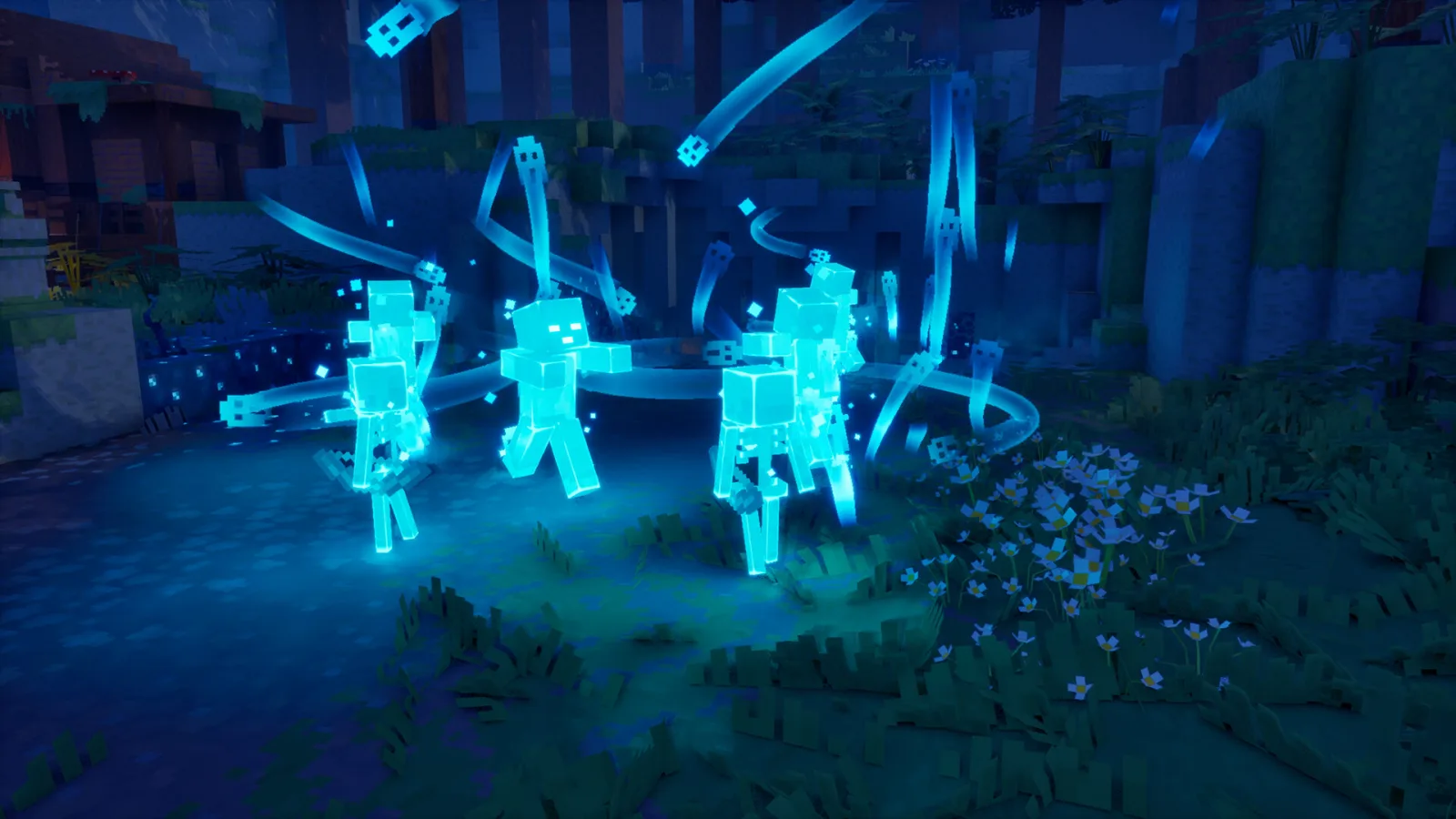
Some enemies are corrupted by souls and wrapped in a blue aura. They’re tougher and more dangerous up close. The same guide suggests dealing with them at range, with a bow or with powers that slow or freeze them, rather than charging straight in.

5. Learn the Sift’s three phases before you go in
The Sift is the new dimension in Minecraft Dungeons II, reached through rifts that open up across the world, as the game’s official listing explains. It cycles through three phases: Flow, Thrive and Endure. Flow is the normal phase, Thrive speeds up soul regeneration, and Endure makes enemies much tougher, according to Dungeons DB.
Thrive is therefore the moment to lean on your artefacts, since their soul cost comes back faster. During Endure, it’s better to play carefully, or pull back if your gear isn’t up to it.
6. Pick online mode, even if you play alone
When you create your character, Minecraft Dungeons II offers an offline mode and an online mode. Beebom recommends the second: you can still play solo, while keeping the option of bringing that character into a friend’s world later. Minecraft Dungeons II supports up to four players, online, on the same screen or a mix of both, with matchmaking to find allies.
According to the official Minecraft site, difficulty adapts to the number of players and the level gap between them, so a newcomer and a veteran can play together. Finally, anyone who plays both Minecraft Dungeons games on the same Microsoft account unlocks the Hero Cape, which also works in Minecraft itself.
Upcoming release dates and major updates are tracked in our games calendar, which you can filter by platform.