The Legend of Zelda: Ocarina of Time came out on 5 November as a Switch 2 exclusive, 28 years after the Nintendo 64 original. Nintendo built this full remake in-house, with help from Monolith Soft, the studio behind Xenoblade Chronicles. I finished the adventure in around thirty hours, from Kokiri Forest all the way to the final showdown with Ganondorf. The challenge was to modernise one of gaming’s great monuments while keeping its soul intact, and Nintendo pulls it off brilliantly. My one real complaint is that it’s noticeably easier, which veterans may find a little disappointing.
At a glance
Ocarina of Time keeps its story and dungeons, and adds a free camera, a proper jump button and a Hyrule that changes from day to night.
The new art direction and the symphonic soundtrack give the 1998 classic a new lease of life.
The puzzles hand out their hints too quickly, and the game is easier than the original.
Link’s journey has lost none of its power after 28 years
It’s a real joy to return to the legendary story of Ocarina of Time, and it hasn’t lost an ounce of its power. You set off from Kokiri Forest as young Link, and the adventure takes you all the way to your showdown with Ganondorf to save Hyrule. The story is faithful to the original, but the dialogue has been fleshed out and several scenes get completely new direction.
NPCs now follow little daily routines, wandering around their villages depending on the time of day, and Hyrule feels far more alive for it.
Nintendo developed the game with its EPD Production Group No. 3. Monolith Soft handled part of the game design, programming and graphics, as Nintendo Life’s report on Monolith Soft’s involvement explains, based on an announcement on the studio’s own website.
An art style that takes some getting used to, then wins you over
The new art direction of Ocarina of Time took me a while to get used to. It mixes realistic environments with cartoonish characters, and the contrast is jarring for the first few hours. I ended up really liking the blend, which gives the remake a look all of its own.
Hyrule’s landscapes are simply gorgeous. The vistas are packed with detail, the colours really pop and the draw distance is seriously impressive. Galloping across the field feels completely different when the horizon stretches that far.
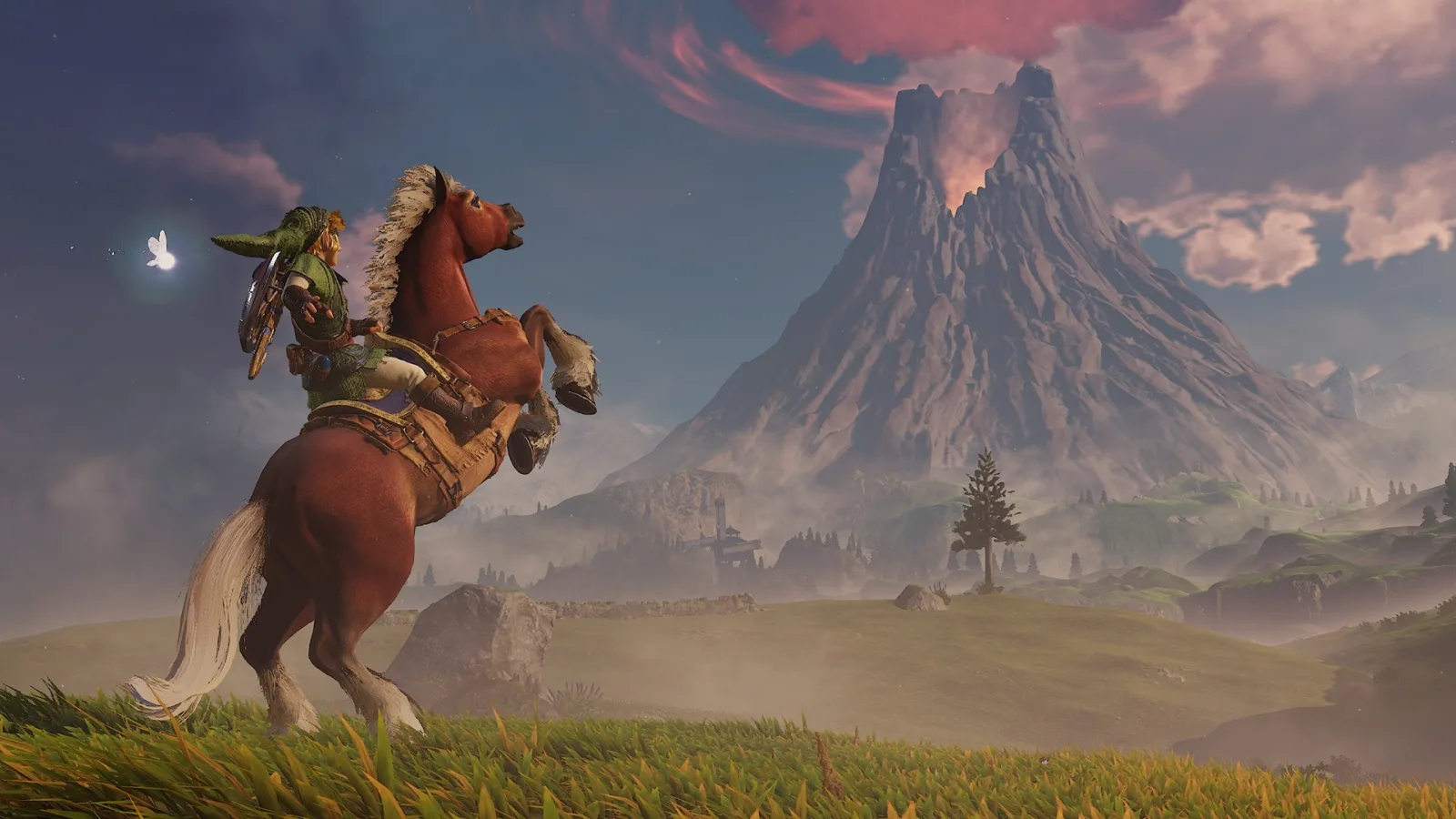
The tech holds up too. According to Digital Foundry’s analysis as summarised by GamesRadar, Ocarina of Time runs at a very stable 60fps on Switch 2, whereas the Nintendo 64 version was capped at 20fps.
Hyrule looks and feels different between day and night
The day and night cycle in Ocarina of Time does wonders for immersion. It affects certain activities, encounters and even what you can explore, so you’ll want to head back to an area at a different hour to see what’s changed.
Whether on foot or on horseback, roaming Hyrule is a pleasure. I loved hunting for secrets in every corner again and tracking down the many hidden items. This world constantly tempts you off the main path. For a full rundown of what’s changed since 1998, our guide to everything new in Ocarina of Time on Switch 2 covers the features Nintendo showed before launch.
The free camera and jump button change how it plays
The free 360-degree camera is one of the biggest upgrades in this remake of Ocarina of Time. It transforms both exploration and combat, since you can finally point the view wherever you like.
Link is far more mobile, too. You can jump manually and sprint, and climbing and swimming are much quicker than they used to be. The inventory has been brought up to date with a modern interface and new shortcuts, which make it much handier.
As for combat, Ocarina of Time is faithful to the original experience. Fights still revolve around using your items, watching enemies closely and working out their weak points. If you loved that thoughtful approach, you’ll find exactly what made it special in 1998, with far more comfortable controls.
Watch it too
Zelda Ocarina of time’s remake lets you rematch every boss against the clock
Reworked dungeons with hints that arrive far too soon
Every dungeon in Ocarina of Time keeps its layout and its iconic theme. Nintendo has added a few changes and some new puzzles, enough to make you rediscover sections you thought you knew by heart.
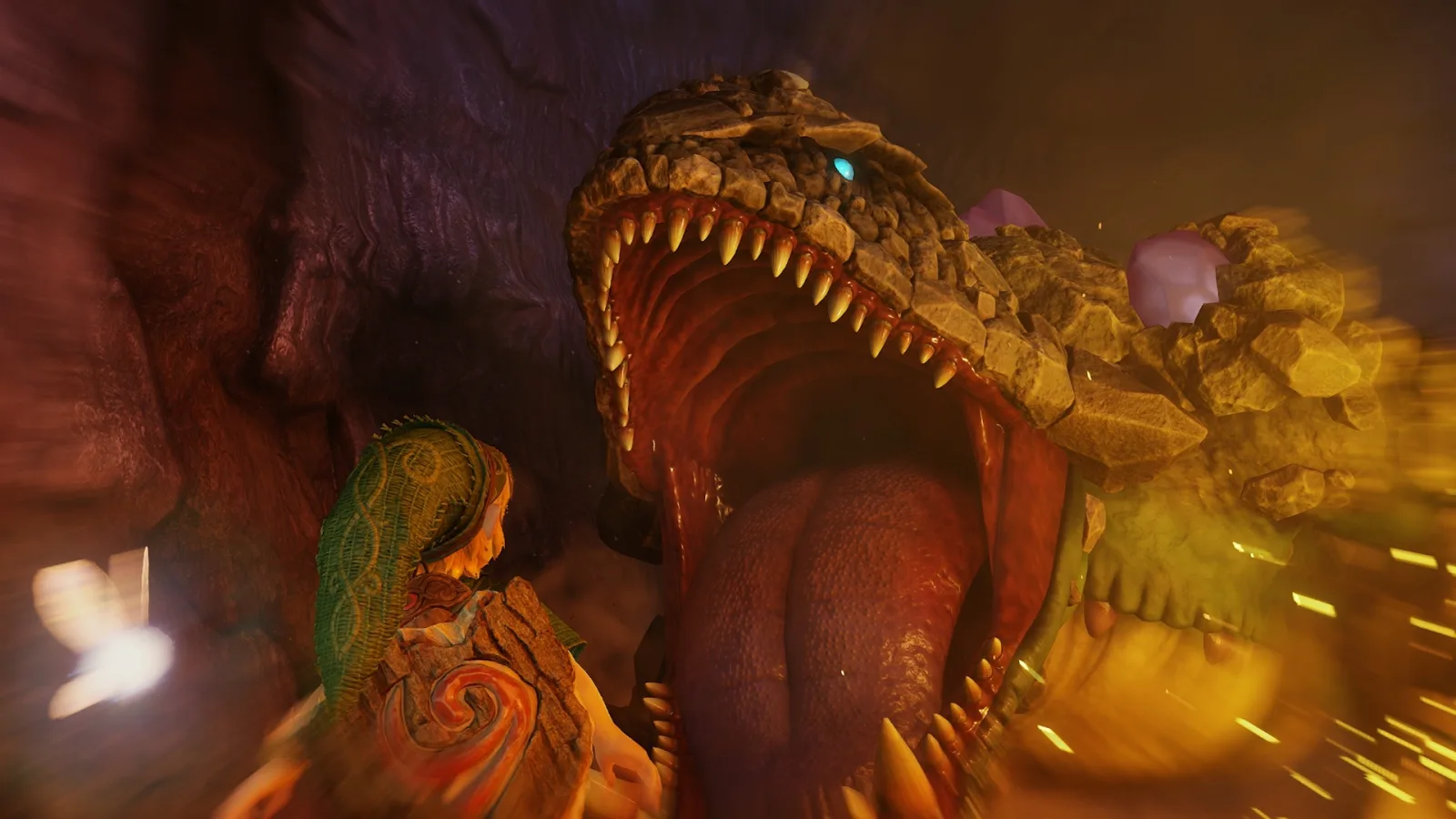
That said, this is where my main complaint lies. The difficulty has been toned down across the board, especially in the puzzles and dungeons, where hints now come thick and fast. If you know the original well, all this help takes away some of the fun of working things out for yourself.
Newcomers, on the other hand, get an ideal way into this classic, with a more accessible adventure than in 1998.
The Hall of Fallen Foes and Great Fairies who now want rupees
Among the new features, the Hall of Fallen Foes lets you study the bestiary and take on the bosses again. It’s a nice idea, but its appeal wears off fairly quickly once your curiosity is satisfied.
The in-game economy has also had a light rework. The upgrades handed out by the Great Fairies now cost rupees, which gives your wallet a bit more purpose.
Expect around thirty hours to reach the end of Ocarina of Time. Side activities and the hunt for hidden items stretch that out considerably if you’re determined to collect everything.
A symphonic re-orchestration that does Koji Kondo’s themes justice
The Ocarina of Time soundtrack gets a superb symphonic re-orchestration that adds a whole new dimension to Koji Kondo’s iconic compositions. Hearing these melodies played by a full orchestra is one of the great pleasures of this remake.
Still, a handful of arrangements didn’t quite win me over. They’re rare, and the score is excellent from the first dungeon to the last.
Ocarina of Time is an essential Switch 2 adventure
All told, this remake modernises one of gaming’s great monuments with its identity fully intact. Critics agree, as the game held a Metascore of 96 from 81 reviews on 4 November, according to Nintendo Life’s report on Metacritic’s best games of 2026, making it the site’s highest-rated game of the year.
Despite difficulty that’s sometimes too forgiving and a few rather incidental additions, I had an enormous amount of fun rediscovering this adventure. Ocarina of Time is essential, for returning players and newcomers alike.

| What we like | What we like a lot less |
|---|---|
| A faithful story, with new dialogue and reworked scenes | Easier overall, with too many hints in the puzzles |
| NPCs who follow daily routines around their villages | A Hall of Fallen Foes with limited appeal |
| Superb vistas and an impressive draw distance | An art style that takes some getting used to |
| A day and night cycle that changes activities and exploration | |
| The free 360-degree camera, manual jumping and faster swimming | |
| Iconic dungeons reworked with new puzzles | |
| A symphonic re-orchestration of Koji Kondo’s themes | |
| What might make you buy itThe legendary journey from Kokiri Forest to Ganondorf, modernised with its soul intact | What might put you offAn easier adventure that gives away its puzzle solutions too quickly |
To see what’s landing over the next few weeks, the Hitbox release calendar lists every date with its official source.