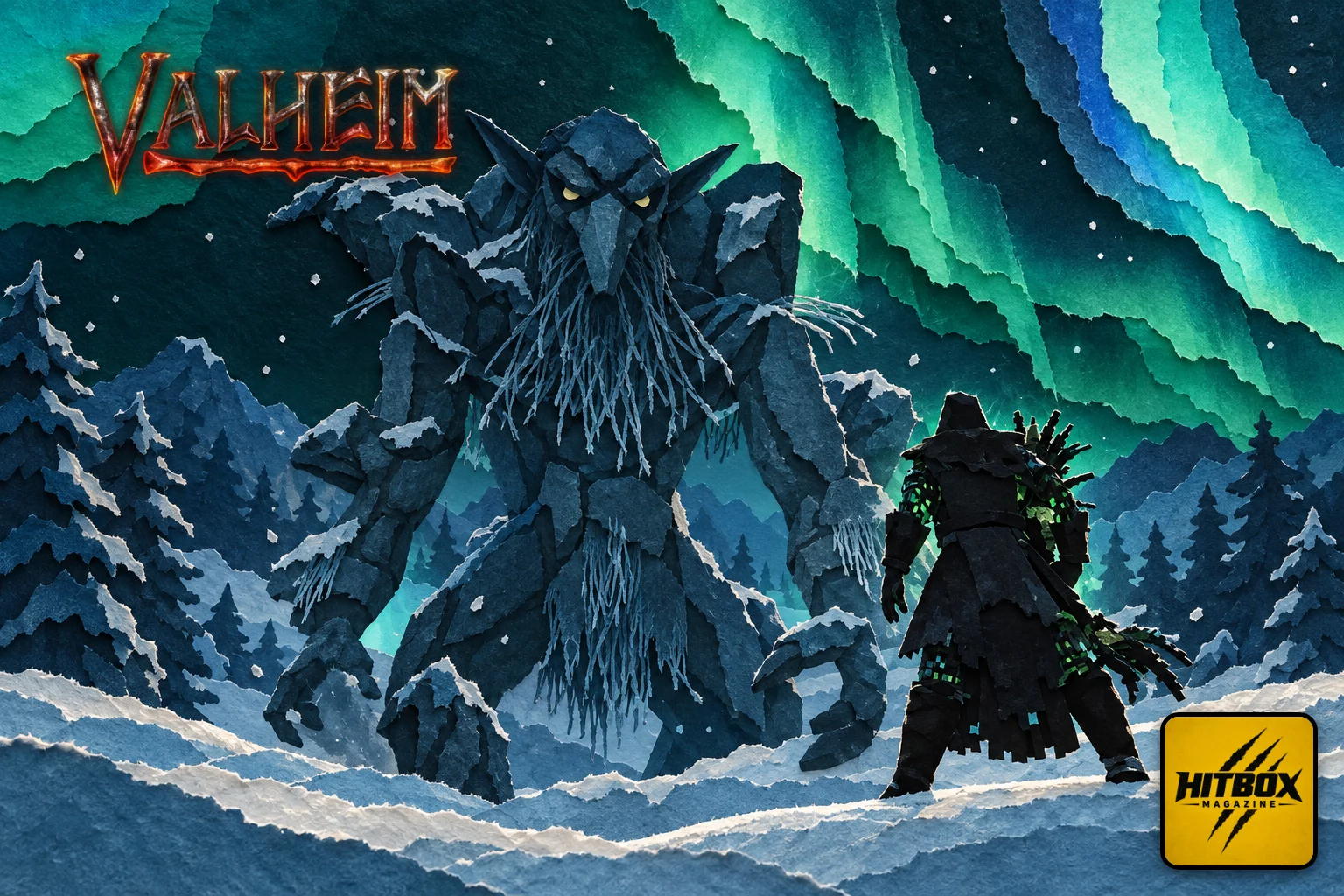
Two bosses now close out progression in Valheim: Fader, who holds the Ashlands, and Kall Fimbulbringer, who arrived with the Deep North on 1.0 launch day. Both demand careful preparation, and above all a damage type picked in advance, because their immunities write off half of a standard endgame loadout. This guide gathers what can be verified about summoning them, their resistances and how each fight unfolds. Iron Gate Studio publishes no technical sheets for its bosses, so every value quoted here comes from player-gathered data, with the source named each time.
At a glance
Fader is summoned with three bells, each built from three fragments.
Kall Fimbulbringer takes three Malicious Blood offered at the Strange Bowl in the Aesir Passage.
Both are immune to spirit damage, and Fader shrugs off fire as well.
Finding Fader and setting up the summon
Fader is the seventh boss in Valheim and holds the Ashlands, the volcanic biome. The summoning ground takes the shape of a coliseum, and the ritual runs on three bells placed around the arena.
Each bell is built from three fragments, which puts the full shopping list at nine pieces. According to guides published by BisectHosting and Mobalytics, those fragments turn up in the Charred Fortresses scattered across the Ashlands, which is to say the most heavily defended ground in the biome.
The Vegvisir that reveals the altar on the map sits in the central tower of those same fortresses, and more rarely on top of Charred Ruins. Without it, hunting for the altar means combing a landscape that spawns enemies continuously.
Preparing for Fader costs more than the fight itself. Nine fragments inside hostile fortresses means several expeditions, each one carrying the risk of losing your gear on the way out.
The damage types that work on Fader
This is the decision that settles the fight. Fader is immune to fire and spirit damage and resists pierce, so a standard bow and anything flaming become poor choices, writing off a chunk of the kit Valheim lets you build for the Ashlands.
Guides from Mobalytics and the community Valheim wiki point to slash, blunt, frost or lightning instead. The same player data has Fader remaining vulnerable to poison, which sets him apart from much of the biome.
One detail crops up across several guides: the Jade enchantment can immobilise the boss, opening damage windows during his most aggressive phases. He summons in waves, so that lock-down serves as crowd control as much as an opening to attack.
A word on reading these numbers. Valheim separates immunity from resistance: immunity cancels the damage type outright, resistance only reduces it. Hitting Fader with pierce still works, it simply earns far less than a slashing weapon of the same tier.
The strategy therefore comes down to three calls made before you walk in: a melee weapon in slash or blunt, a frost or lightning option in reserve, and enough tools to hold ground when the waves land.
Opening the Aesir Passage and calling Kall Fimbulbringer
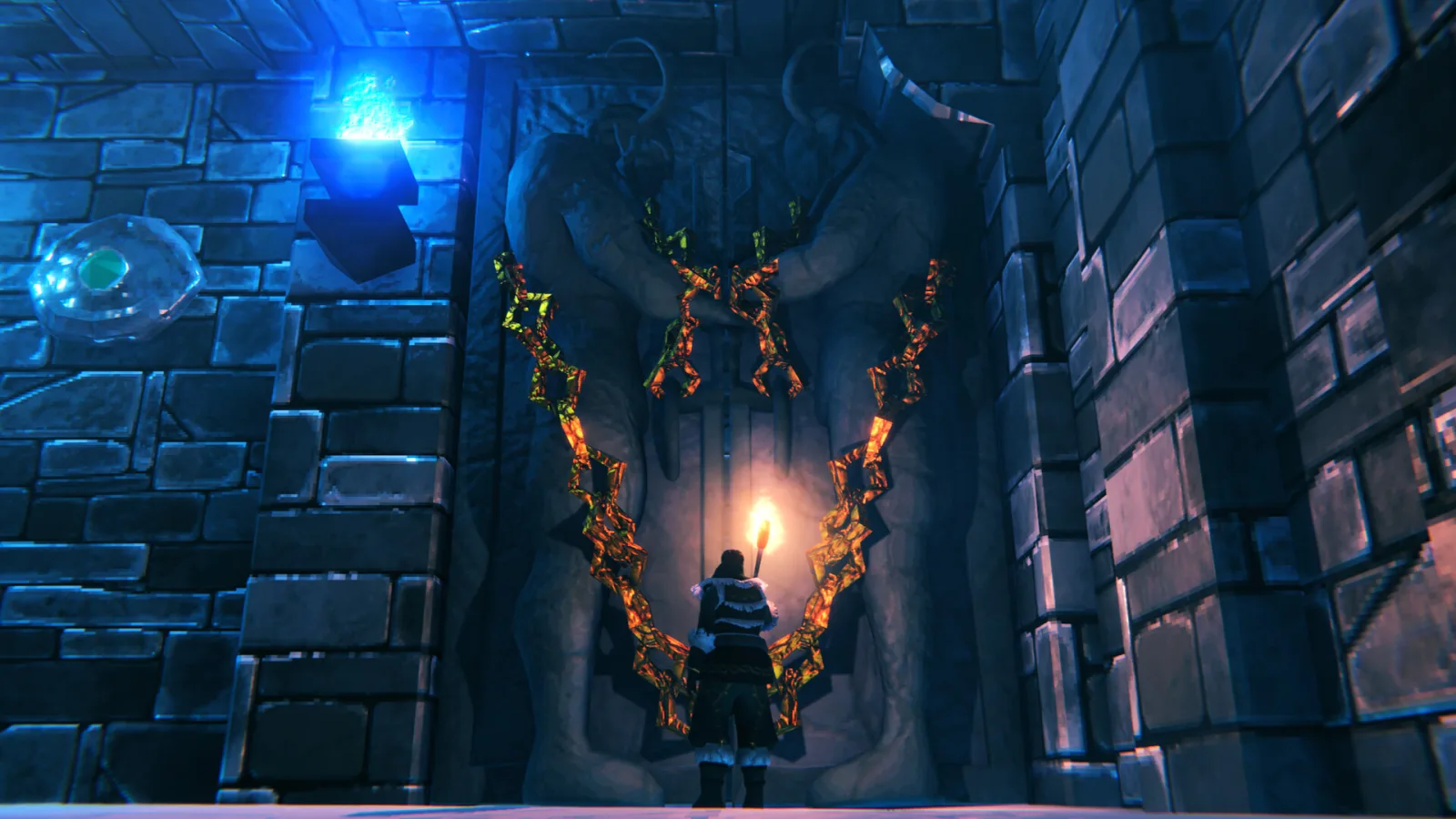
The eighth boss in Valheim waits inside the Aesir Passage, deep in the Deep North. The location is revealed by a Vegvisir specific to that biome, which is the first thing worth hunting down.
The summon works differently from the other Forsaken. The offering goes inside the passage, at the Strange Bowl, where earlier bosses called for an open-air altar, and it takes three Malicious Blood. Once the offering is made, the entrance to The Prison opens and the fight begins.
Getting hold of those three Malicious Blood is the real body of the work. Guides published by the Valheim wiki and by Beebom trace the route through the Winding Tunnels, three crafted Intricate Keys, several cleared Mörkhalla dungeons and three Jotun invasions turned back.
Put plainly, preparing for Kall Fimbulbringer accounts for a good share of everything the Deep North has to offer. The boss sits at the end of that chain, once the three steps are done.
The three phases of Kall Fimbulbringer
The fight breaks into three clear stages, as documented by the Valheim players who have run it. Kall opens with heavy chained melee attacks in a space that leaves little room to back off.
He then turns completely invulnerable while summoning Aspects of the earlier Forsaken, a sequence that turns the fight into crowd management. The final phase adds elemental attack chains, falling ice and Tendrils.
On resistances, the community data lines up: Kall resists pierce, fire, frost and lightning, and is fully immune to spirit damage. Blunt and slash land as normal damage, which makes heavy melee weapons the safest pick.
Valheim’s last two bosses shut the door on elemental damage. After hours spent tuning enchanted weapons, the endgame mostly asks for raw hitting power and footwork.

The full order of the eight bosses
To place both fights, here is the progression as Mobalytics and G2A lay it out: Eikthyr in the Meadows, The Elder in the Black Forest, Bonemass in the Swamp, Moder in the Mountains, Yagluth in the Plains, The Queen in the Mistlands, then Fader in the Ashlands and Kall Fimbulbringer in the Deep North.
In Valheim, each win unlocks the resources and the power that make the next biome survivable. Skipping a step is possible, and it mostly amounts to walking into the Ashlands in gear built for the Mistlands.
The sign that a group is ready for the Deep North comes down to one line repeated across progression guides: Ashlands combat should feel controlled rather than desperate, with a food and potion economy already running smoothly.
Valheim is back near the top of the Steam chart
This renewed interest in the bosses tracks with how busy the game is right now. A reading taken on 25 September from Steam’s public API puts Valheim seventh among the most played games, with a 24-hour peak of 195,154 concurrent players.
Over on Twitch, TwitchTracker measures an average of 20,442 concurrent viewers across seven days, which places the game eighteenth among the most watched categories.
Iron Gate Studio shipped version 1.0 on 9 September after five years in early access, and the fixes have kept coming: announcements on the game’s Steam page list patches 1.0.10 and 1.0.12 on 11 September, then 1.0.14 and 1.0.15 on the 17th and 18th. Values quoted in this guide can move from one update to the next, and they are worth checking again after each patch.
Every upcoming release and update date is gathered in our calendar.