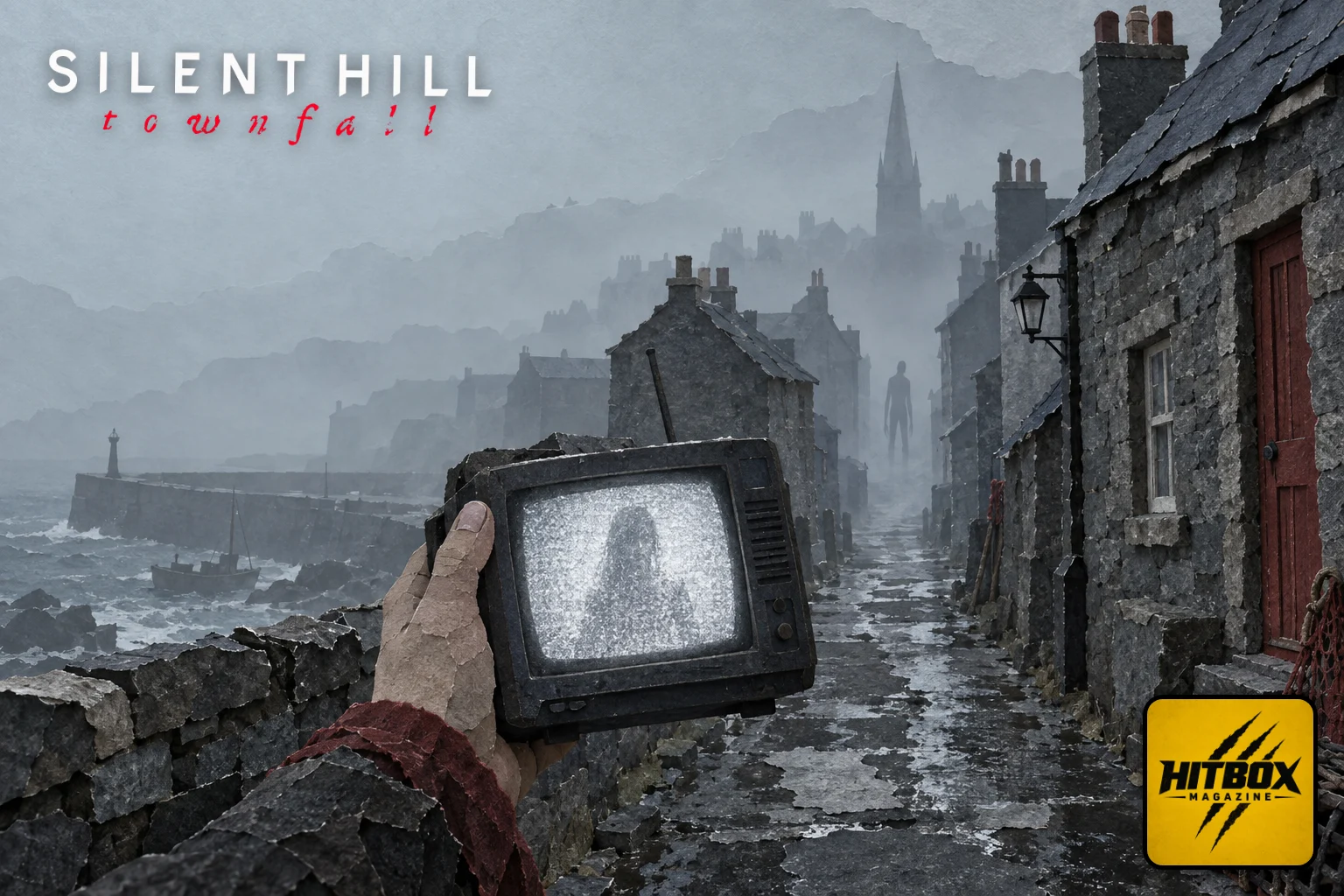
Silent Hill: Townfall doesn’t play like any other entry in the series, and that is both its biggest strength and the thing most likely to split its audience. Screen Burn swaps the over-the-shoulder camera for a first-person view, and builds the whole pace of the game around exploration, puzzles and stealth rather than combat. I found one of the strongest atmospheres the licence has ever had, a real taste for suggestion and a handful of genuinely clever puzzles. I also found chase sequences that got on my nerves, and a production that is clearly more modest than a big AAA release. Here is what works, what doesn’t, and who this unusual Silent Hill is really for.
At a glance
First-person view, exploration, puzzles and stealth: Townfall reinterprets the series’ DNA.
The atmosphere of St. Amelia, the sound and the staging by suggestion are the game’s big successes.
Stealth against a near-invulnerable creature and clumsy combat are its main weaknesses.
Silent Hill: Townfall sees the series through new eyes
Screen Burn’s first big decision is obvious within minutes. Silent Hill: Townfall drops the third-person camera that has followed the series for years and puts you straight behind the character’s eyes. It is a change that reshapes what the game actually asks you to do.
The structure follows the same logic. The game leans heavily towards exploration, stealth and puzzle-solving, and pushes fighting into the background. If you are expecting a survival horror where you empty a clip into every corridor, you may be in for a surprise, so I would rather say it up front.
What stands out most is how consistent it all is. The first-person view serves immersion, immersion serves tension, and tension serves a story that would rather be uncovered than told. Every design choice pulls in the same direction. You might not like where it is heading, but it is hard to accuse the game of not knowing where it wants to go.
The game launches on 24 September on PC and PS5, co-published by Annapurna Interactive and Konami, according to Konami’s official announcement. If you want to set this review against the first published verdicts, we rounded up how the press received it when the embargo lifted.
Watch it too
Silent Hill Townfall is betting on its own review scores
St. Amelia, a Scottish village lost in the fog
This is the thing that stays with me most. The Scottish coastal village of St. Amelia, smothered in thick fog, sets up a heavy, oppressive and deliberately mysterious atmosphere. You move slowly, because the place itself makes you want to check every corner before taking another step.
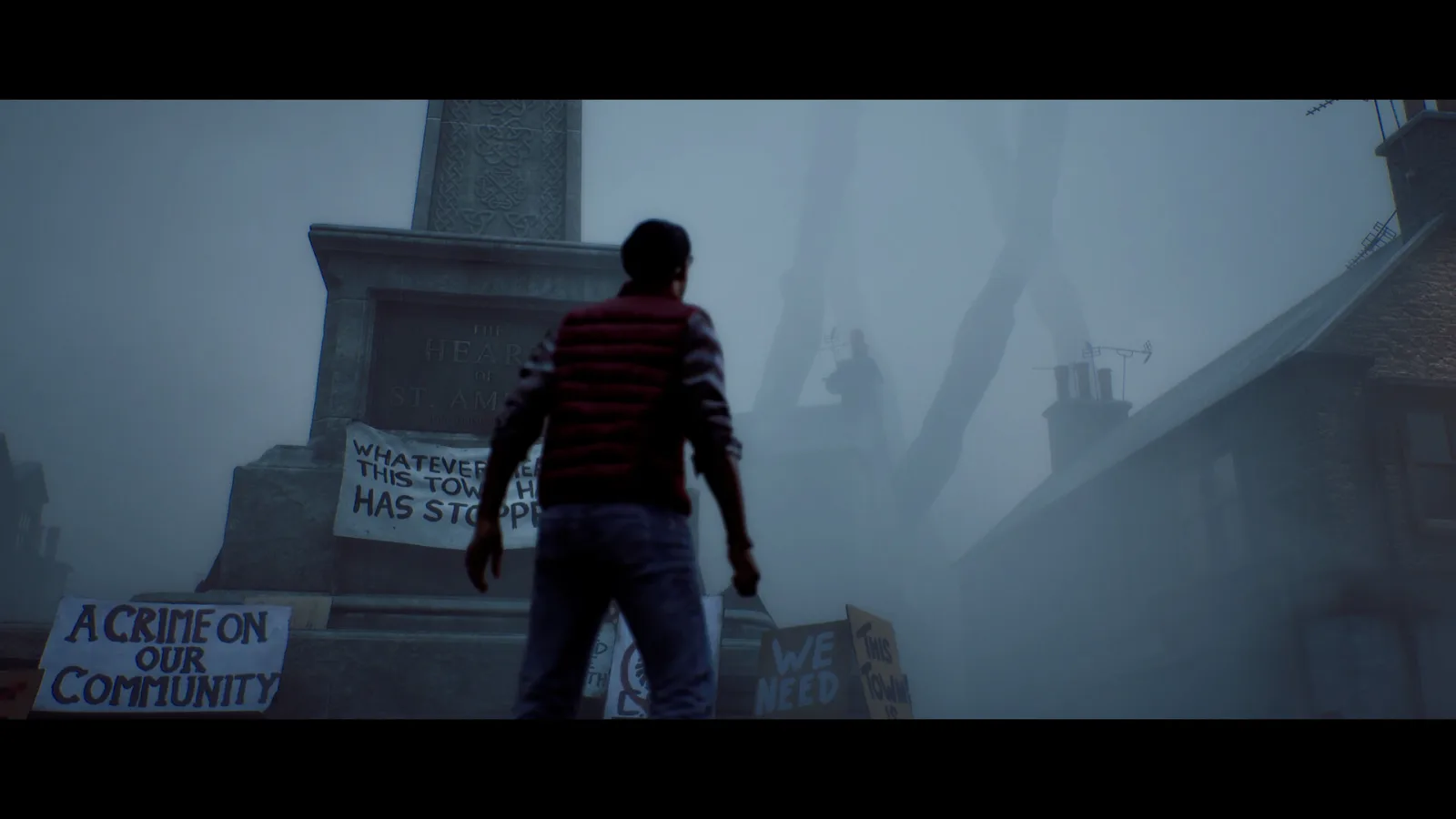
The pacing matches the setting. The game takes its time, lets you observe and make sense of your surroundings, then every so often triggers far more brutal spikes of tension. That contrast between long quiet stretches and sudden bursts of danger is one of the most effective tricks it has.
The first-person view strengthens the effect. Encounters with creatures feel closer and more claustrophobic, and the direction makes heavy use of cinematic framing and tight spaces. Where an external camera would let you see danger coming, Townfall shoves it right in your face.
Sound design does the rest. Music and effects play a direct part in the horror, and the quiet phases let the tension drop just before the game springs a new threat on you. Silence is as unsettling here as noise.
Puzzles that make you actually look
Puzzles take up a lot of room, and that is good news. They regularly ask you to study your surroundings, read the clues and make the connections yourself, instead of picking up a code written in plain sight on a wall. The game trusts the player, and rewards you when you get it right.
Several situations rely on understanding the environment, and the moment the answer clicks is genuinely satisfying. Honestly, those were the passages that hooked me most. That said, a few puzzles felt too obscure to me, and the line between well-judged difficulty and a clue you simply cannot find gets thin.
Exploration is tightly woven into the storytelling. Computers, cassette tapes, slides, documents and assorted 1990s objects gradually piece together what happened in the town. Searching a room is as much about understanding the story as it is about finding what you need to survive.
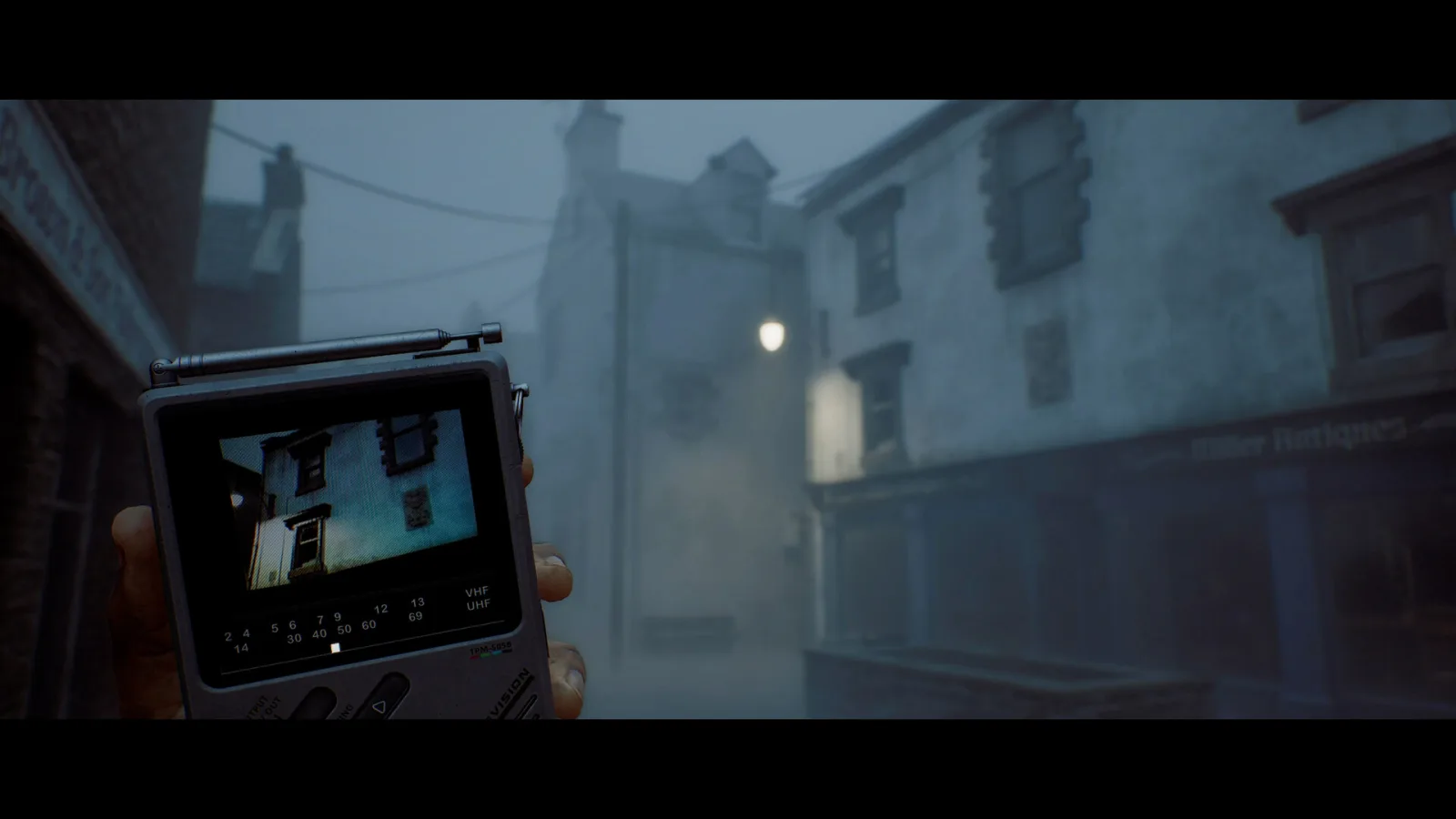
The smartest idea, in my view, is the portable television that replaces the series’ traditional radio. It detects creatures, picks up transmissions and plays a part in certain puzzles. It works as a storytelling device, an exploration tool and a survival tool all at once, and it ties into every side of the game.
Staging that hints rather than explains
Time plays a central role in Silent Hill: Townfall. The game uses the idea of a loop several times and brings you back to places you have already visited, with shifts in context, mood or layout. Going back somewhere never quite means finding it as you left it.
The staging would rather suggest than explain everything. Some creatures, events and phenomena stay deliberately unexplained. The game leans on silhouettes, distant apparitions, sounds and small details in the scenery to feed the unease. What you can’t see is scarier here.
To be fair, this approach asks for patience. Players who want clear answers and a well-defined threat may find the game frustrating at times. For my part, it is exactly what gives Townfall its identity, and what brings it closest to the series at its best.
One detail matters for long-time fans: Silent Hill: Townfall makes no attempt to replay the codes of the best-known entries, neither their camera nor their approach to combat. What it does keep is the series’ most precious quality, that knack for making a place feel wrong before anything has even happened there. Fans who love the licence for its unease more than its monsters will find plenty here, and those are the players the game speaks to most directly.
Stealth and combat, the two real weak spots
Combat is clearly not the focus, and the game makes no secret of it. Fights stay fairly simple and can feel clumsy. Townfall pushes you to avoid, run or hide far more than to take enemies out, which fits its intent but does not make the few fights any more enjoyable.
Stealth is therefore the big change in this Silent Hill, and it is also where the game annoyed me most. Some chase sequences become frustrating, largely because of the behaviour of a creature that is almost impossible to hurt. Detection that feels unfair kills the fear fast. When being spotted seems arbitrary, tension gives way to irritation, and the game gets the opposite of the effect it wants.
The technical and budget limits show too. Some environments repeat, enemy variety is limited, and the overall production is more modest than a big AAA game. A few slowdowns creep in as well. Still, the art direction, the fog, the settings and the realistic visuals give the game a strong identity despite its smaller means.
Verdict: an unusual Silent Hill well worth the trip
Silent Hill: Townfall bets on atmosphere, puzzles, exploration and storytelling far more than on combat. On that ground it gets the essentials right: St. Amelia leaves a mark, the portable television is a lovely idea, and the staging can conjure unease out of very little.
My reservations are mostly about stealth, a few puzzles that are too hard to decipher and variety that is sometimes thin. I may be wrong about how much those flaws will weigh for you, because a lot depends on your tolerance for chase sequences. What remains is a more modest production than its predecessors, but one with real artistic coherence and a clear wish to offer a fresh reading of Silent Hill’s DNA.
In practice, I would recommend Silent Hill: Townfall to players who enjoy searching, reading, linking clues together and letting a mood seep in, even if it means putting up with a few tiresome stealth passages. If you are mainly after action, tense fights and a threat you can face head-on, you are better off skipping it or waiting for a sale. Anywhere in between, it will come down to your patience with the chases, which remain the real tipping point.

| What we like | What we like a lot less |
|---|---|
| Puzzles that make you study your surroundings and connect the clues yourself | Simple, clumsy combat that you mostly try to avoid |
| The portable television, a detector, receiver and puzzle tool in one | A few puzzles so obscure that the clue becomes impossible to find |
| A story pieced together through cassette tapes, slides and documents | A modest production: repeated settings, little enemy variety, a few slowdowns |
| Sound design and staging that build unease through suggestion | |
| What might make you buy itThe atmosphere of St. Amelia, a Scottish village drowned in fog, heavy and oppressive | What might put you offChases against a near-invulnerable creature, with detection that sometimes feels unfair |
Upcoming release dates and major updates are tracked in our games calendar, which you can filter by platform.