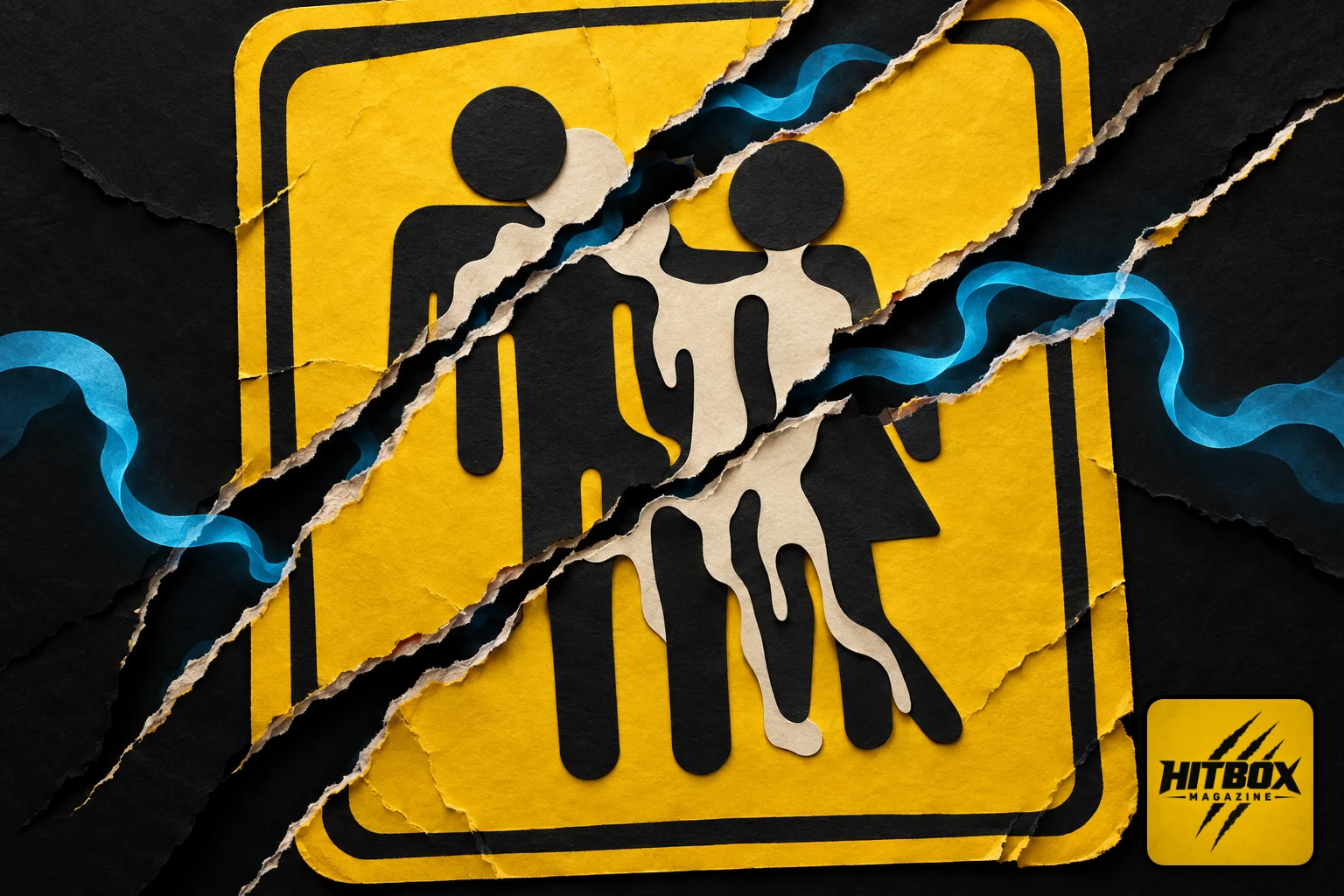
Four days after landing on PS5, Marvel’s Wolverine is in the news for two complaints that have nothing to do with each other. The first concerns a guidance mechanic players started mocking within hours of launch. The second is an accusation that the game shipped with AI-generated artwork, sparked by a bathroom sign filmed for TikTok. Insomniac Games answered both on September 19, once with a patch and once with a technical denial. Here is what the update actually changes, what the studio says about the AI claim, and where the sales figures circulating since launch really come from.
At a glance
Update 1.001.005 lowers the opacity of Scent Trails and Audio Sense indicators, and fixes crashes.
James Stevenson, Insomniac’s head of community and marketing, denies any AI-generated assets and points to a UV map bug.
Analytics firm Alinea Analytics estimates 1.9 million copies sold in three days, a number Sony has never confirmed.
Update 1.001.005 turns down the scent trails rather than removing them
Start with the patch. Released on September 19, four days after the September 15 launch, it targets the most visible criticism aimed at the game since it arrived. Scent Trails, the blue effect that shows on screen what Logan can smell and walks him toward his objectives, now render at lower opacity. Audio Sense indicators get the same treatment. The update also addresses crashes affecting a small share of players.
What matters here is what Insomniac chose not to do. The mechanic stays exactly where it was, it simply shouts less. The studio says it is looking into letting players switch these senses on or off from the settings menu in a later update, with no date attached. Intensity gets fixed first, the principle comes later.
The scale of the backlash owes a lot to one nickname. Players rebranded the effect fart gas, and once that stuck, every screenshot travelled with it. An interface problem becomes much harder to ignore when the community finds an image that good for it.
A bathroom sign put Marvel’s Wolverine at the centre of an AI accusation
The second story is a different animal. A TikTok video highlighted an in-game bathroom sign where several male stick figures overlap in ways that make no sense. The caption posed it as a question rather than a statement, asking whether Insomniac had really used AI in a 300 million dollar Wolverine game. The clip spread, and the accusation spread with it.
The answer came straight from the studio. On X, James Stevenson, head of community and marketing at Insomniac Games, wrote: “No. This is a UV map bug, and we have a fix coming. There are no AI-generated assets in Marvel’s Wolverine.” That is a flat denial, a promised fix, and a claim that nothing in the game was machine-generated.
The exchange was picked up by Kotaku, which traced the clip back to its source. The site notes one detail that supports the studio: the sign looks different depending on the angle you view it from, as though the textures were colliding with each other. A generated image does not warp when you walk around it.
What a UV map bug is, and why the explanation holds up
The term deserves unpacking, because the whole denial rests on it. A UV map is the mapping between a flat two-dimensional image and the three-dimensional surface it wraps onto. Think of flattening a cardboard box so you can print on it, then folding it back into shape. The UV coordinates decide which part of the print lands on which panel.
When those coordinates are wrong, the texture no longer lands where it should. It stretches, it repeats, or it folds back over itself. On a sign made of simple pictograms, that produces exactly what the video shows: overlapping human shapes and a drawing that stops meaning anything.
Bugs like this are routine in a game this size, and they slip through testing easily when they sit on background set dressing. Nobody prioritises quality-assurance passes on a toilet sign. That said, the confusion is understandable from a player’s point of view, since bad UV mapping and bad generative output share a symptom: badly assembled human figures. Insomniac says a fix is coming, without giving a timeline.
Marvel’s Wolverine sales numbers circulate without Sony ever confirming them
That leaves the third number doing the rounds since launch, and it needs more care than the other two stories. According to the estimate published by analytics firm Alinea Analytics, the game moved roughly 1.9 million copies in three days, worth about 130 million dollars. The firm puts digital pre-orders at around one million of that total, and physical copies at 22.9 %. The United States accounts for 53 % of early buyers, ahead of the United Kingdom at 7 % and France at 5 %.
Three caveats apply, and some of them come from the firm itself. These are modelled estimates, not publisher figures. Neither Sony nor Insomniac has released any launch numbers. And the model does not account for unsold retail stock still sitting on shelves, which can inflate the headline figure at the moment you read it.
With that said, the order of magnitude is worth noting, since it would put the game ahead of Death Stranding 2’s lifetime PS5 performance, which Alinea Analytics places near 1.8 million. Commercially strong despite a lukewarm critical reception. The real verdict arrives in the coming weeks, once players finish the campaign and official numbers land, assuming they ever do.
To see what’s landing over the next few weeks, the Hitbox release calendar lists every date with its official source.