
The Legend of Zelda: Ocarina of Time returns on 5 November as a Switch 2 exclusive, 28 years after it first arrived on the Nintendo 64. The full remake keeps the map, the story and the order of the dungeons, yet a lot has changed under your thumbs. Nintendo has also just published a developer interview revealing that a few very modern ideas were tried and then dropped. For anyone who knows the original inside out, the real test is whether these tweaks freshen up the adventure without upsetting its pace.
At a glance
Ocarina of Time launches on Switch 2 on 5 November with a jump button, a free camera and a sprint.
Cutscenes are fully voiced, the score has been re-recorded by an orchestra and the ocarina can be played through the microphone.
Nintendo tested warp points and then removed every one of them to protect the pacing of the 1998 game.
Link can finally jump and sprint in Ocarina of Time
On the Nintendo 64, Link jumped automatically when he ran towards a ledge, and you had no say in when it happened. The remake gives jumping its own button and lets you swing the camera around with the right stick, something the single-stick controller of the time simply could not do. Series producer Eiji Aonuma showed off both changes himself in the gameplay demonstration Nintendo broadcast on 8 September.
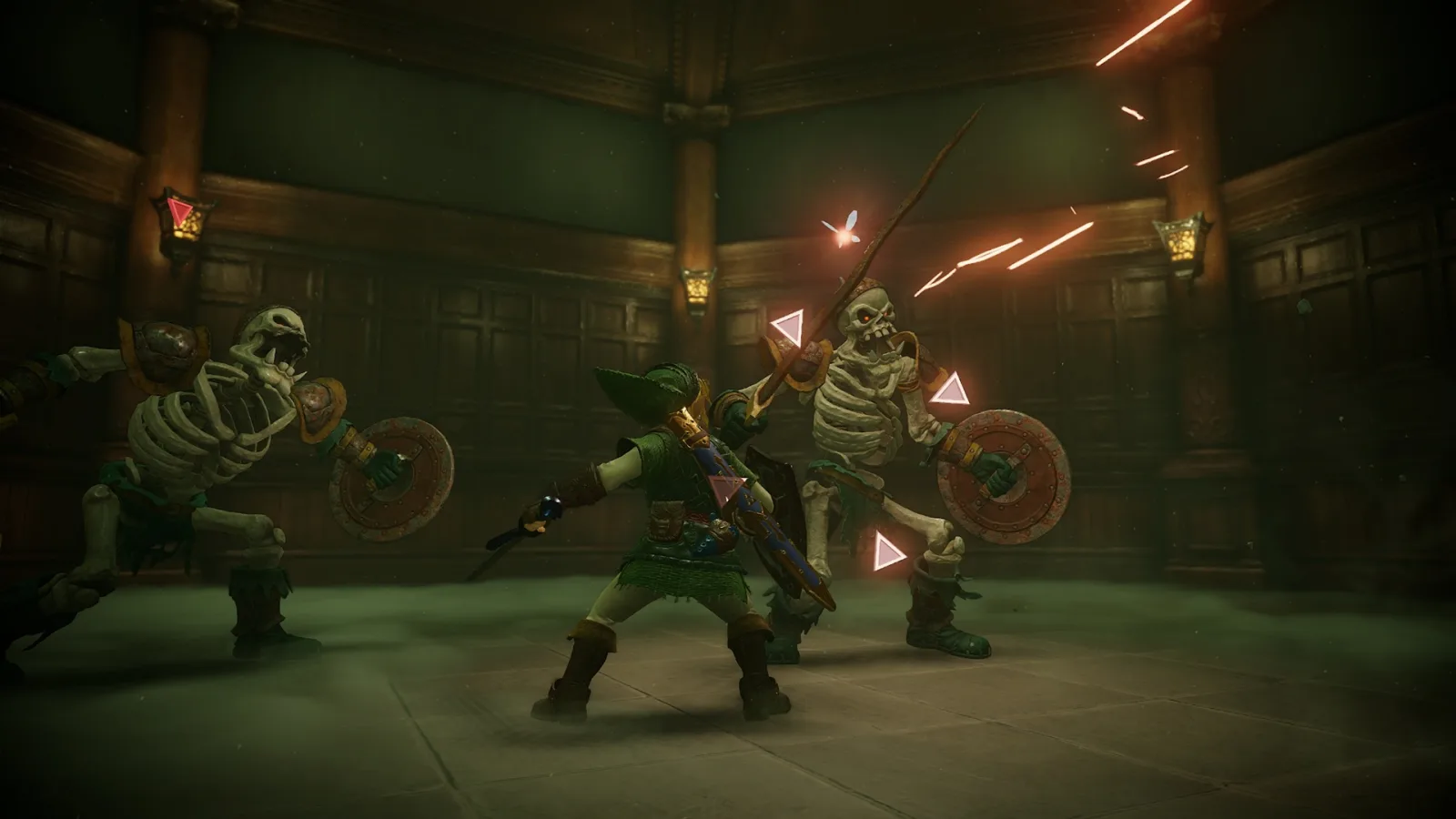
In the original, chaining forward rolls was slightly quicker than running, so plenty of players tumbled their way across Hyrule Field. Now, holding the roll button sends Link into a sprint. French site Journal du Geek, which played three sections of Ocarina of Time at a preview event, lists more tweaks to combat and movement: the brief slowdown on every hit has gone, the bow and the slingshot can be aimed with the gyroscope, and swimming and climbing are both faster.
Three interface settings, one of which even hides your hearts
The remake borrows an idea from Breath of the Wild: the on-screen display comes in three settings, called Standard, Pro and Master. According to footage gathered by GamesRadar from the preview sessions, Pro strips almost everything away, heart meter included, and keeps only the Z-targeting indicator. Master removes even that, leaving Navi, hovering over the enemy, as the only sign that you have locked on.
The menus have been reworked too. The three C buttons of the N64 pad give way to a quick-select bar with four shortcuts on the D-pad, Journal du Geek reports. Your starting wallet holds 200 rupees instead of 99, and a new quest log, presented as a tapestry that is embroidered as the adventure unfolds, keeps track of your current goal in Ocarina of Time.
A Hyrule that keeps living after nightfall
Time used to stand still as soon as Link set foot in Kokiri Forest or Hyrule Castle Town. In Ocarina of Time on Switch 2, the day and night cycle runs everywhere, and Nintendo promises new characters and enemies once night falls, according to Journal du Geek. Castle Town also loses its fixed cameras, so you can wander around with a free camera from the town gate all the way to the Temple of Time without a single loading screen.
Hyrule Field keeps its original scale. Art director Aya Shida explains that the team gave the explorable areas a high level of detail and deliberately enlarged landmarks such as the castle and the windmill. The content shifts a little, though: YouTuber Zeltik, quoted by GamesRadar, came across a new side quest at the Castle Town potion shop and a harder version of the shooting gallery. Journal du Geek adds that the Forest Temple has been reworked as well, with a proper hookshot target at the entrance and a lift that saves you from walking the same corridors again.
Navi finally speaks, and you can hum into the microphone
Cutscenes in Ocarina of Time are now fully voiced, from Zelda to Ganondorf, and Link is the only one who never says a word. Navi has a new voice, and her tips appear in small bubbles that no longer interrupt play. The soundtrack has been re-recorded by a full orchestra, using Koji Kondo’s original compositions.
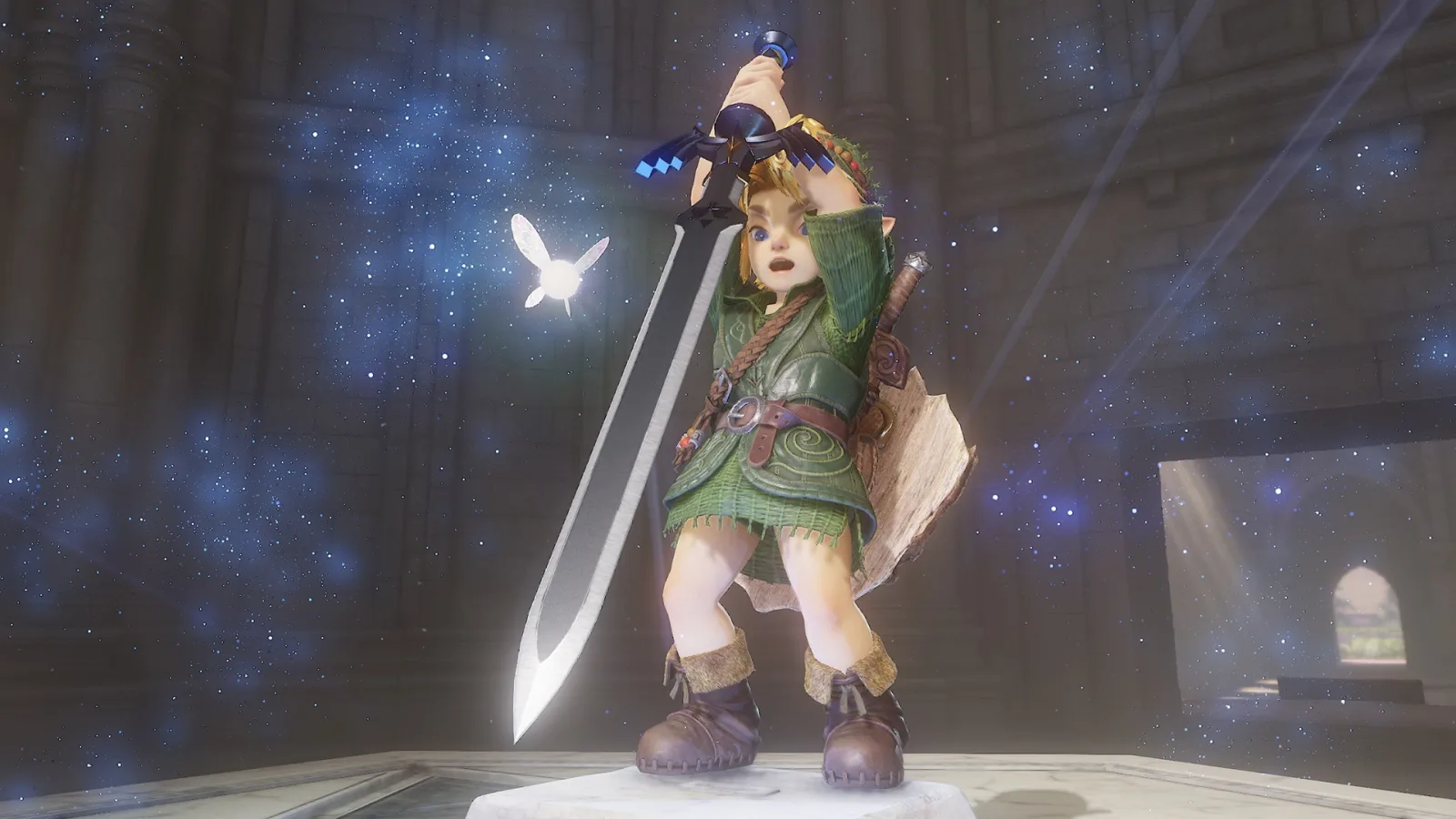
The most surprising addition of all relies on the Switch 2’s microphone. You can hum a melody for Link to play on his ocarina, and it also works with a real ocarina sold on Nintendo’s own store, again according to Journal du Geek. The buttons are still there for anyone who would rather not sing in front of their console.
Eiji Aonuma asked for warp points, then had them taken out
Some things were left alone on purpose. In Nintendo’s Ask the Developer interview published on 2 November, Eiji Aonuma explains that he asked the team to add warp points, which did not exist in the original game, to give players shortcuts. Once they played with them, the team realised they were missing the moments when you stop along the way because something has caught your eye. “So even though I was the one who proposed adding warp points, they just weren’t working for me in the end, so I got the team to take them all back out again,” he says.
Director HokWai Ng explains that the team rebuilt Ocarina of Time with today’s technology while keeping the experience of the original intact. As in 1998, its world is split into separate maps for each area, so that arriving somewhere new keeps its impact. The team even asked the artist behind the Nintendo 64 illustrations to draw a new map for the game. The rest of the interview is due on 3 November.
Every upcoming release and update lives in our video game release calendar, refreshed at each newsroom session.