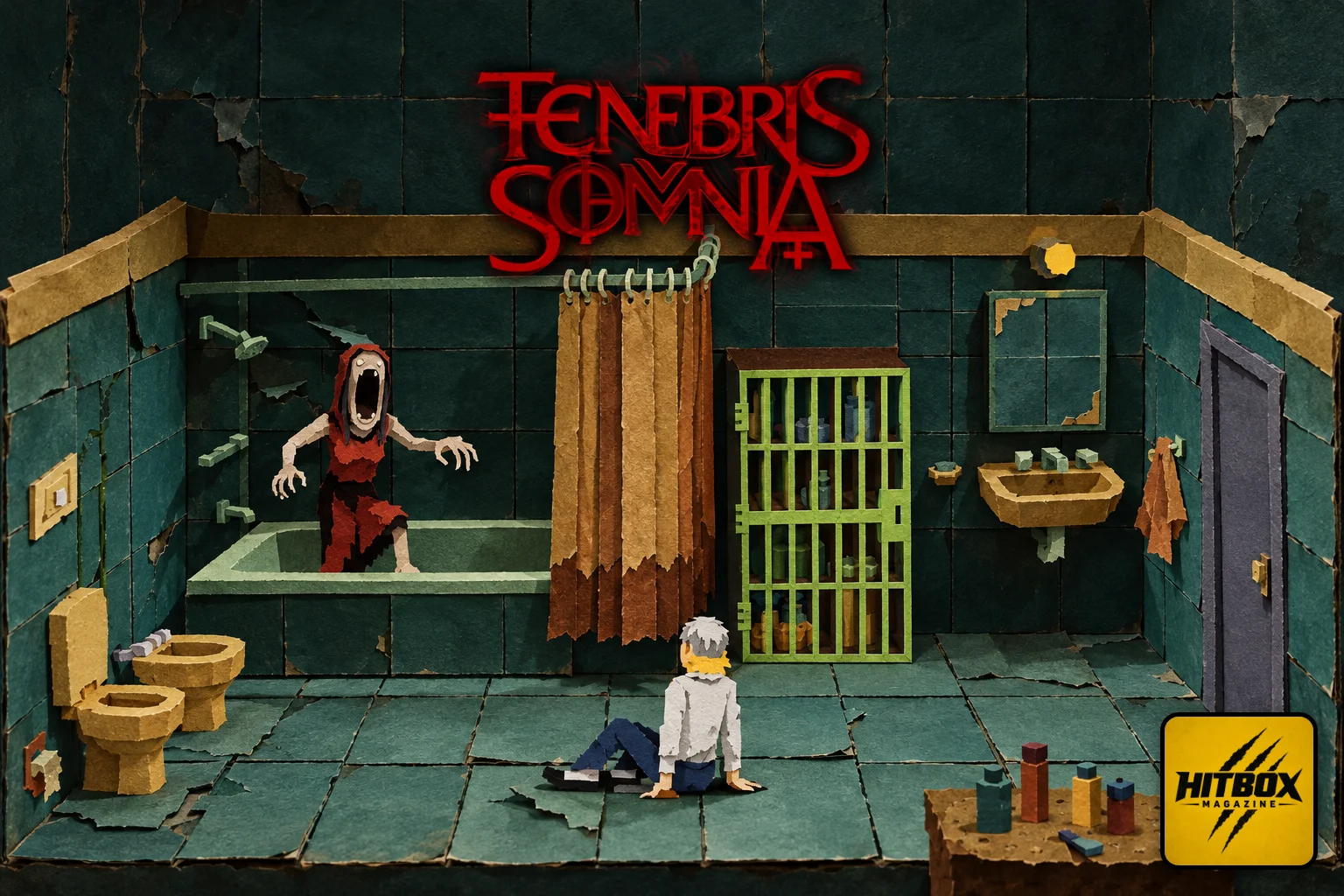
Tenebris Somnia came out on 16 October on PC, PS5, Xbox Series, Switch and Switch 2, published by New Blood Interactive. It’s a 2D pixel-art survival horror game that tips its hat to Clock Tower, with one feature you can’t miss: live-action scenes shot with real actors, complete with monster make-up and practical gore. I’ll be upfront: I found it enjoyable, and not much more. Its story and its filmed sequences really grabbed me, but sluggish controls and a few muddy puzzles kept pulling me out of the nightmare. It’s aimed squarely at a small corner of gaming, people who miss the 8-bit era and fans of old-school horror films, and for them it’s well worth a look.
At a glance
Tenebris Somnia blends pixel art with live-action footage, and the cuts between the two land every time.
The story, about a break-up that curdles into obsession, is its biggest strength.
A slow heroine, clumsy fights and some vague clues drag the pace down.
Tenebris Somnia brings Clock Tower back in pixels and blood
You play Julia, a film director who has the same nightmare every night: her ex-boyfriend, Ivan, being torn apart by monstrous creatures. She sets out to find him, and what she uncovers leads straight back to their old relationship. We covered Tenebris Somnia’s mix of pixel art and live-action footage when its release date was announced. Tenebris Somnia is developed by Andrés Borghi and Saibot Studios, and it costs £14.39 on Tenebris Somnia’s Steam page.
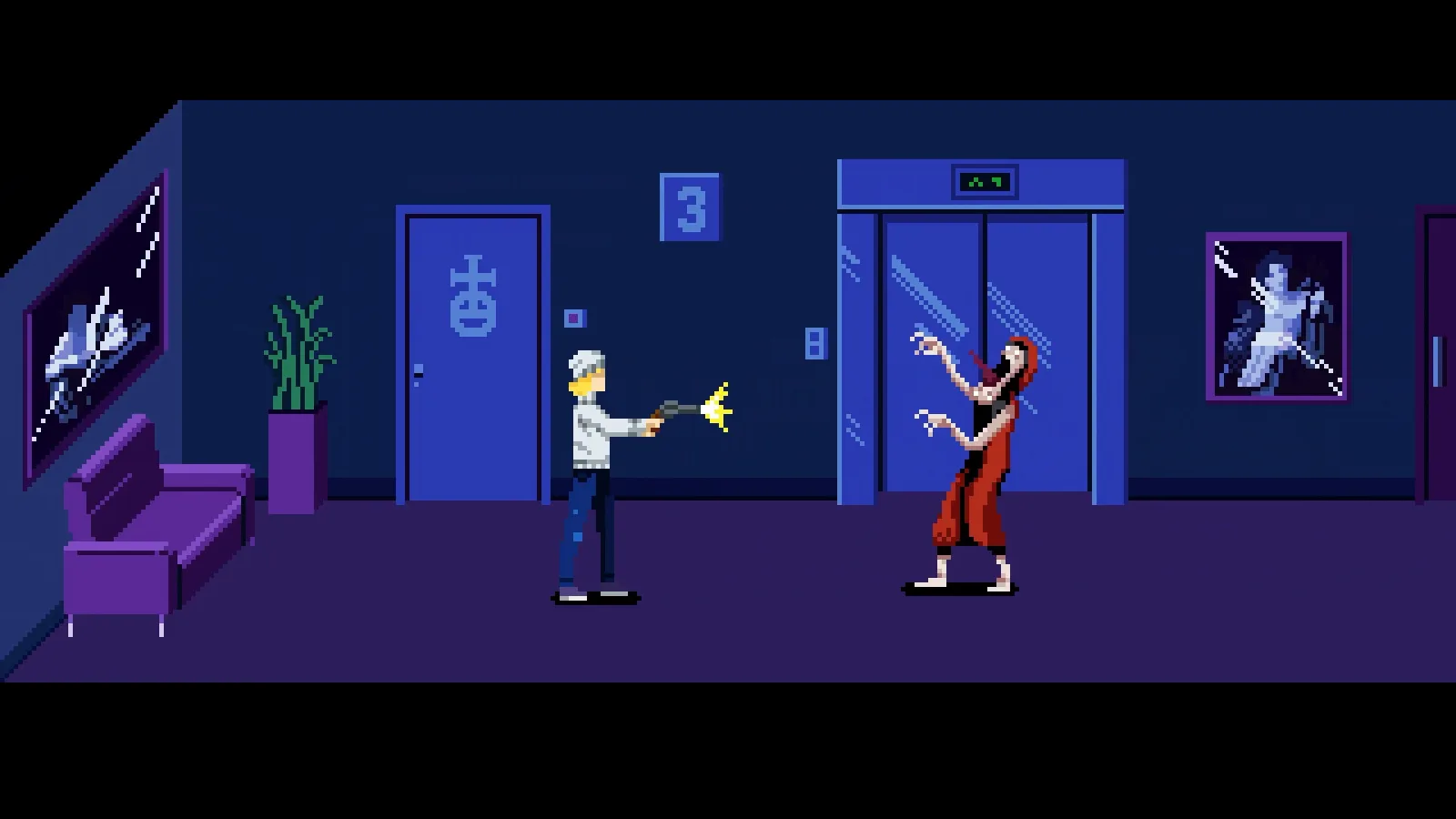
Clock Tower’s influence is obvious from the opening minutes. Side-on view, pixel art, old-school survival: you explore, you search and you run away a lot. It’s a game that wears its influences proudly, and it’s lovely to see a team this sincere about its love for the genre.
Julia and Ivan’s story is what keeps you going
The story is what hooked me most. Tenebris Somnia peels back the couple’s secrets bit by bit, and it deals with things you rarely see in a horror game: break-ups, obsession, grieving a relationship and living with the choices you’ve made. Every reveal makes you want to push on to the next one.
The locations follow the same path. Early on, you’re walking through fairly ordinary places. Then everything starts to warp, turning abstract and properly unsettling, as if the characters’ memories and wounds were taking over the walls. I loved how much of the story is told through the places themselves, without spelling everything out in text.
The live-action scenes turn Tenebris Somnia into a horror film
This is where Tenebris Somnia impressed me most. The pixel art regularly gives way to live-action sequences, and the switch from one to the other is striking. You’re making your way through a tiny 8-bit set, and suddenly the scene cuts to real footage. Those transitions make the horror hit far harder.
The production backs it up, too. The actors are convincing, the monster make-up is excellent, the gore is done the old-fashioned way, with real effects in front of the camera, and the sound design is genuinely disturbing. You can tell the team knows old-school horror cinema inside out.
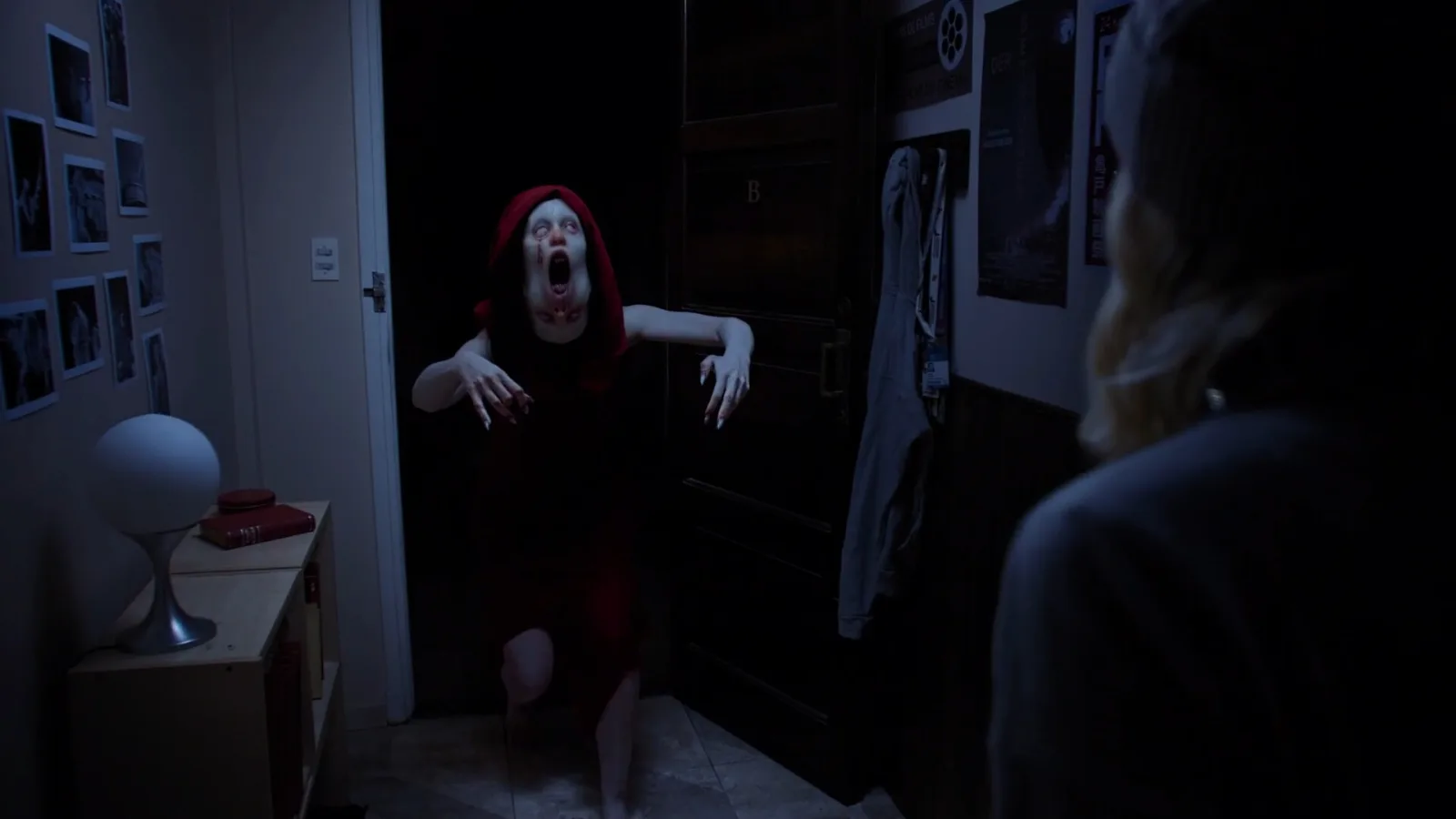
Outside the cutscenes, the art direction holds up as well. The contrast between everyday places and twisted supernatural zones gives the game a strong visual identity that you’d recognise at a glance. In a similar vein, METAMORPHOSIS is also betting on pixel-art horror, a sign the indie scene still has plenty to say in this style.
Every bullet counts against the creatures
As a survival game, Tenebris Somnia plays it classic. Ammo and healing items are scarce, enemies can overwhelm you quickly, and running is often the smartest move. I had to keep a constant eye on my ammo, and that’s exactly the kind of tension you want from survival horror.
The bosses are the tensest moments. You have to work out their attacks while managing whatever’s left in your inventory, and some of these fights are long and tough. Thankfully, checkpoints sit just before them, so a failed attempt doesn’t send you back miles. Without them, a few of these encounters would quickly have become a chore.
Film reels, mirrors and inverted colours drive the puzzles
Puzzles make up a big chunk of the game. You pick up items, combine them and use them in the right spot. Most of them come naturally, while others ask you to look closer and think a little harder. My favourites are the ones that play on Julia’s world: photography, film reels and environments you can manipulate.
Tenebris Somnia also has a few genuinely original ideas. At times the game flips your controls, inverts the colours on screen or uses mirrors to reveal hidden details. It feels as though Julia’s nightmare is spilling over onto the player, and those are the sequences that stuck with me most.
Not everything is so well judged, though. In some sections the clues just aren’t clear enough, and I found myself trying interactions at random or backtracking to work out what the game wanted from me. Those moments kill the pace, and the fear goes with it.
Julia drags her feet, and the chases pay for it
The handling is Tenebris Somnia’s real weak spot. Julia moves slowly, fights can be laborious and you can get snagged on the scenery. In a game where you’re often fleeing, that’s a problem: a chase that should crank up the pressure turns frustrating when your character gets stuck halfway through it.
Honestly, that’s what stops me scoring it higher. The atmosphere and the story make you want to keep going, and the controls keep reminding you that you’re holding a pad.
A good survival horror for pixel-art lovers and old gore fans
All told, Tenebris Somnia is a short adventure that bets everything on its storytelling and presentation, and on both fronts it hits hard. There are several endings to find, which gives you a good reason to go back. That said, its clunky handling and occasionally obscure puzzles keep it in the good-but-no-more bracket.
If you grew up on 8-bit games and old-school horror films get your pulse going, go for it. Everyone else might want to keep it in mind as a curiosity, perhaps for a sale.
| What we like | What we like a lot less |
|---|---|
| A strong story about break-ups and obsession | Clues that are sometimes too vague |
| Striking live-action scenes, make-up and gore included | A heroine who’s slow to control |
| Locations that warp as the story unfolds | Fights that can feel laborious |
| Wild ideas with the controls, colours and mirrors | A character who snags on the scenery during chases |
| Real tension around ammo and healing items | |
| Well-placed checkpoints before bosses | |
| Several endings to discover | |
| What might make you buy itA heartfelt tribute to Clock Tower and old-school horror films | What might put you offHeavy controls that spoil the chases |
Upcoming release dates and major updates are tracked in our games calendar, which you can filter by platform.